Using Mini Cranes and Electric Mini Cranes for Tight Spaces: Which Features Are Needed for Which Job?
In tight work areas where large tower cranes or forklifts cannot enter, load lifting operations become a logistics obstacle. Maneuverability is required inside workshops, between building floors, or in rooftop applications. At this point, mini crane solutions step in with their compact structures and high lifting capacities.
When choosing the right model, you must analyze technical data such as boom length, hook height, and drive type. We examined the differences between an electric mini crane and classic models along with their usage scenarios.
Compact designs allow these devices to work where standard equipment cannot reach.
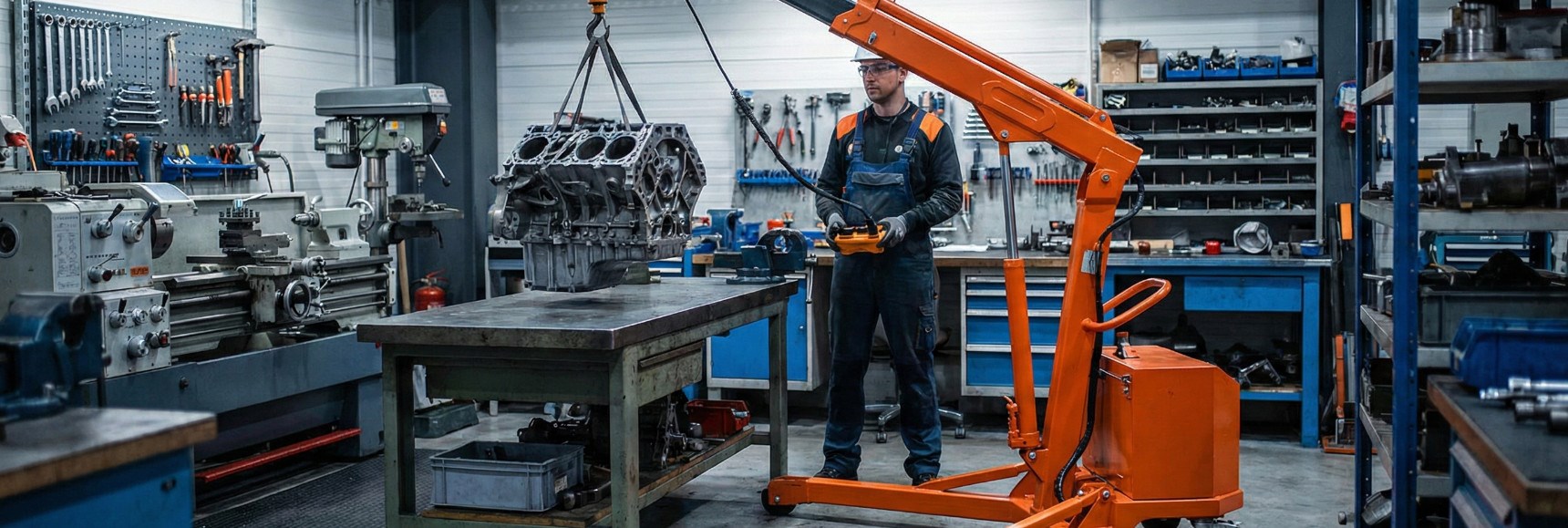
- Small Workshops: Moving engine blocks, molds, or heavy metal parts between workbenches in narrow aisles.
- Interior Construction: Accelerating the process of pulling materials from elevator shafts or transferring loads between floors.
- Rooftop Transport: Providing a practical solution for transferring HVAC units, solar panels, or insulation materials to the roof.
- Machine Maintenance: Providing the precise lifting support required for removing and installing parts of stationary machines within a facility.
When purchasing a mini crane, focus on these 4 criteria to meet your operational needs:
Lifting Capacity
Mini cranes generally offer capacities between 500 kg and 3000 kg. The carrying capacity decreases as the boom angle changes. Check the load diagram to clarify the weight capacity at the furthest extension point
Boom Reach and Hook Height
The distance for dropping the load or the height for lifting it is critical. A telescopic boom allows you to pass over obstacles in tight spaces. The hook height must be compatible with the ceiling clearance.
Foldable Chassis Structure
The area the device occupies during transport or after operation is important. Models with a foldable chassis pass through standard doors and fit into elevators. This feature increases mobility.
The technology in the drive system affects operation speed and precision.
- Speed: An electric mini crane lifts the load faster and with constant acceleration compared to manual models. It saves time in repetitive tasks.
- Precision: Motorized systems offer millimetric positioning. In mold and machine assembly, this precision reduces error risks.
- Energy Cost: Electric models consume energy only during operation. Since they reduce operator fatigue to zero, they increase labor efficiency.
Technical Comparison Table
|
Feature |
Classic (Manual/Mechanical) Mini Crane |
Electric Mini Crane |
|
Lifting Power |
Physical Effort / Manual Pump |
Electric Motor |
|
Speed |
Low |
High and Adjustable |
|
Precise Positioning |
Medium |
High (Millimetric) |
|
Operator Fatigue |
High |
None |
|
Maintenance Need |
Low (Mechanical parts) |
Medium (Motor and wiring) |
|
Ideal Use |
Occasional and light tasks |
Intensive and serial operations |
Working in tight spaces necessitates equipment reliability and maneuverability. When investing in a mini crane, consider both weight capacity and the ease of installation. Electric mini crane models provide a balance of speed and safety in high-tempo facilities. Paftar optimizes your logistics processes with certified crane solutions suitable for different industrial sites.