Stacker Selection Based on Warehouse Rack Height: Battery and Electric Guide
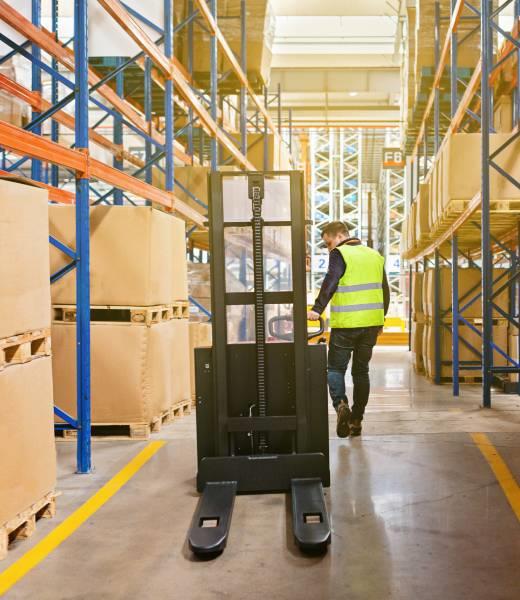
The most effective way to reduce warehouse costs is to utilize vertical space. As rack heights increase, pallet trucks working at the ground level become insufficient. At this point, stackers come into play. The correct machine selection depends not only on lifting capacity; but also on rack height, aisle width, and daily workload. A wrong choice leads to a machine that cannot move between racks or insufficient lifting height.
We examined the technical criteria and battery-powered stacker technologies to be considered during warehouse setup or revision.
The first data point to look at when choosing a stacker is the "maximum lifting height." However, this data alone is not sufficient. The machine's collapsed mast height (for passing through doors) and free lift feature (working in low-ceiling areas) are of critical importance.
Simplex (Single) Mast: Generally lifts up to 1.6 meters. Ideal for truck loading.
Duplex (Double) Mast: Used for racks between 3.0 - 3.5 meters. The majority of standard warehouse racks are in this range.
Triplex (Triple) Mast: For heights of 4.5 - 5.5 meters and above. The mast consists of three parts nested within each other.
Attention: As the height increases, the load capacity the machine can lift (Residual Capacity) decreases. A battery-powered stacker that lifts 1.5 tons at 3 meters may only lift 800 kg at 5 meters. Definitely check the load diagram.
The speed of the stacking operation depends on the maneuverability of the machine. Aisle width (AST value) is the distance required for the machine to turn 360 degrees with the load.
Standard electric stacker models generally operate in aisles between 2.2 meters and 2.5 meters. The pallet type is also a determining factor. For closed-bottom pallets, wide-leg (straddle leg) models should be preferred. Euro pallets (80x120) are compatible with standard fork machines.
The intensity of the operation and transport distance determine the driving type of the machine. The table below helps you choose the right stacker class for your warehouse.
|
Feature |
Walk-behind |
Platform (Stand-on) |
Ride-on (Seated) |
|
Lifting Height |
Max. 3.5 - 4.5 Meters |
Max. 5.5 - 6.0 Meters |
6.0 Meters and above |
|
Working Distance |
Short (0-30m) |
Medium/Long (30m+) |
Long (50m+) |
|
Aisle Width |
Narrowest (approx. 2.2m) |
Medium (approx. 2.5m) |
Wide (2.8m+) |
|
Operation Speed |
Slow (4-6 km/h) |
Fast (6-9 km/h) |
Very Fast (9-12 km/h) |
|
Shift Suitability |
Single Shift |
Double Shift |
Intensive Shift |
In the sector, the terms battery-powered stacker and electric stacker are often used interchangeably. However, there are two main distinctions in the technical infrastructure: Drive motor technology and battery type.
Motor Technology: DC vs AC
Old-generation DC motor machines require periodic maintenance such as carbon brush replacement. New generation AC (Alternating Current) motor electric stacker models are brushless. They do not require maintenance, have higher energy efficiency, and perform regenerative braking (energy recovery).
Battery: Lead Acid vs Lithium-Ion
- Lead Acid (Water) Battery: Requires regular pure water addition. Charging time is long (8-10 hours). Cannot be charged between shifts. Initial investment cost is low.
- Lithium-Ion (Li-Ion) Battery: Maintenance-free. Does not emit gas. Works all day with opportunity charging (charging during breaks). When buying a battery-powered stacker, Li-Ion is advantageous for long-term TCO (Total Cost of Ownership).
You are setting up a warehouse from scratch and your budget is limited. The ideal setup for a business with 500 m2 area and a rack height of 4.5 meters is as follows:
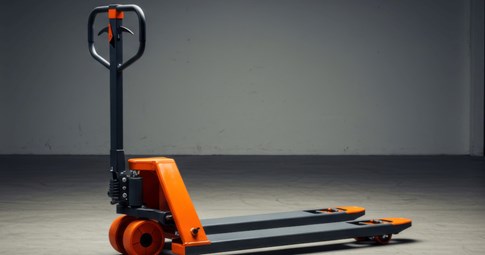
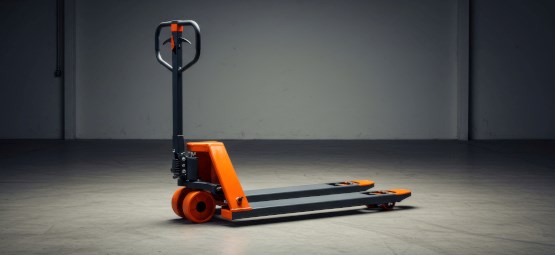
- Ground Operation: 1 unit of 2.0-ton capacity Lithium Battery Pallet Truck for truck unloading and short-distance transport.
- Stacking Operation: 1 unit of 1.6-ton capacity, platform battery-powered stacker with 4.5 meters lifting height for placing products on racks.
This configuration allows you to manage truck traffic and use your vertical storage space to full capacity. Choosing a platform model prevents operator fatigue in long aisles and increases work speed.
Efficiency in stacking processes is measured in seconds. An electric stacker that fully complies with your rack system and load type prevents work accidents and reduces product damage to zero. Paftar's technical team examines your warehouse project and offers the most economic solution suitable for load diagrams. The right investment is the guarantee of operational continuity.