How to Make Load Transport Safer in Challenging Ground Conditions?
Logistics operations do not always take place on smooth, perfectly leveled floors. Construction sites, ramp areas, or warehouses with concrete floors worn down over years of use can turn load-moving processes into significant occupational safety risks. The uncontrolled movement of tons of weight on sloped, slippery, or uneven surfaces can lead not only to equipment damage but also to irreversible personal injuries.
"Challenging ground" is more than just a physical obstacle; it is an operational process that must be managed with the right technology. So, how do you ensure safety under these conditions?
1. Eliminating Floor Differences: Cargo Platforms
One of the greatest risks of challenging ground conditions is the difference in levels and unevenness of the floor. Instead of trying to overcome these gaps with manual tools, the most logical solution is to move the load vertically to a safe level.
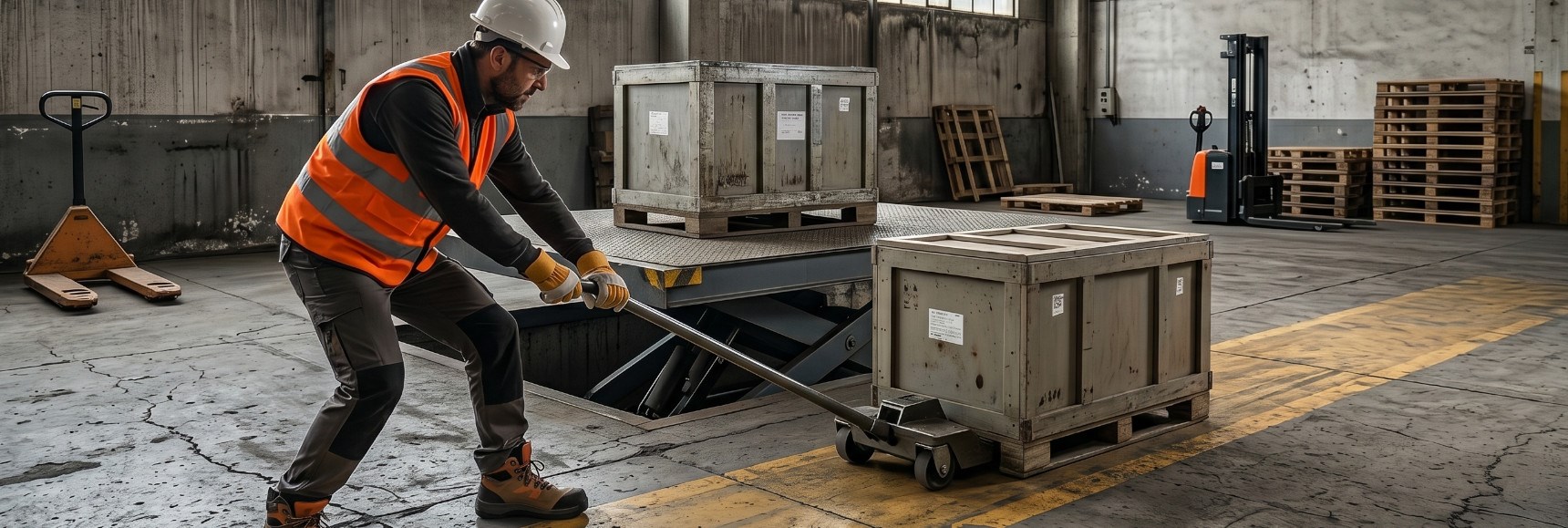
Using a stationary cargo platform allows the load to break contact with the uneven floor and reach different ground levels or higher elevations without vibration. Especially when transferring heavy-tonnage products, you can eliminate the risk of tipping and vibration caused by surface irregularities through these platforms.
2. Reducing Big Risks with Small Equipment
Moving heavy loads horizontally across tight spaces or damaged floors within a facility is typically done using "machine skates" and trolleys. While these small giants can carry tons of weight, operator attention and floor preparation are of vital importance.
For safe transport on difficult terrain, the following steps are critical:
-
Floor Preparation: Always clean oil leaks, dust, or loose materials on the planned route.
-
Correct Wheel Selection: For damaged floors, wheels with shock-absorbing properties, such as polyurethane or special alloys, should be preferred.
-
Combined Solutions: By applying the micro-measures found in our guide on safe transport with load platforms, machine skates, and beam trolleys, you can ensure proper load stabilization and prevent major accidents.
3. Safety Matrix: Risk Management by Ground Type
Review the table below to determine which equipment to prioritize based on the ground condition:
|
Ground Condition |
Primary Risk |
Critical Solution / Equipment |
|
Sloped / Ramp |
Sliding Back / Loss of Control |
Braked Transportation Equipment and Chocking |
|
Level Difference (Step) |
Tipping Over |
Hydraulic Cargo Platform |
|
Slippery / Oily |
Skidding |
Rubber-Coated Machine Skates and Floor Cleaning |
|
Damaged / Cracked Concrete |
Vibration and Mechanical Fatigue |
Wide-Surface Trolleys and Low Speed |
4. The Invisible Threat: Operator and System Alignment
Most accidents on challenging grounds stem from pushing limits with the mindset that "the machine can handle it." To make safety permanent, remember these three rules:
-
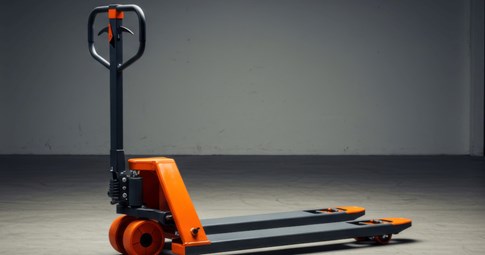
Equipment and Task Alignment: Select the machine based on the floor, not the operator's convenience. A standard pallet truck, when used on a slope, can turn into a deadly weapon.
-
Smart Hardware: Invest in technological aids such as tilt sensors and load cells to minimize human error.
-
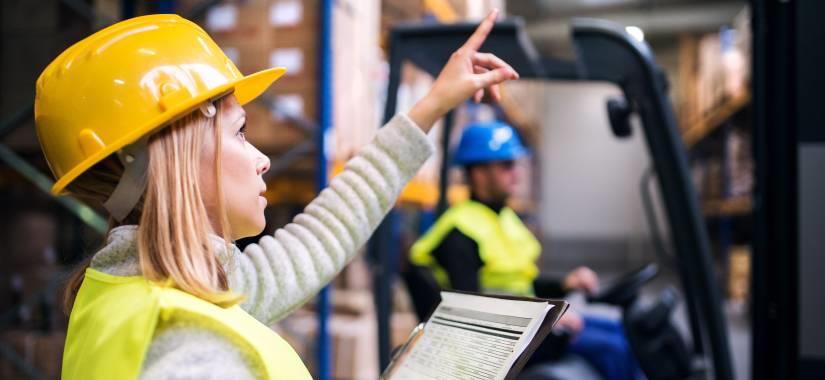
Aware Operator: It is just as critical for an operator to know what not to do on a specific floor as it is to know the equipment's capacity. For more details, see our guide on load lifting operator errors and system selection.
In summary; load transport on challenging grounds ceases to be a risk and turns into an efficient operation through the right combination of cargo platforms and specialized transport tools.