Occupational Safety in Pallet Truck Usage: Frequently Asked Questions
When the statistical data of occupational accidents occurring in logistics centers and production sites are examined, it is seen that cases such as foot crushing, ramp tipping, and uncontrolled load shifting resulting from the incorrect use of equipment, which are seen as simple transport vehicles but have the capacity to move tons of weight, have a worrying density within total warehouse accidents. Pallet truck usage is a process requiring too much technical discipline and attention to be left to the operator's initiative. Proper training prevents accidents. Regular inspection protects the equipment. Safety culture saves lives.
Ensuring operational safety is possible not only by hanging a paper with rules on the board but by making these rules a reflex in every movement within the field. A battery pallet truck operator must know the braking distance, turning radius, and load balance of the machine they use by heart.
Question 1: What Should I Watch Out For When Carrying Loads on a Ramp?
Ramps and inclined surfaces are the blind spots where pallet truck accidents occur most frequently. When using an electric pallet truck, the load should always be positioned facing the upper side of the ramp; that is, the load should be in front when climbing, and the load should be in the back (operator in front) when descending. This rule prevents the load from sliding. The risk of the load tipping over is minimized. One should never go diagonally on a ramp. No turns should be made.
Question 2: Is It Safer to Push or Pull?
The answer to this most frequently asked question in manual models varies according to the floor condition and the operator's viewing angle, but ergonomically, pulling the load (using body weight) provides a more controlled movement than pushing (spine pressure). The field of vision opens up when pulling. The load may block the view when pushing. However, a manual model should never be pulled towards the operator on a ramp.
Motorized systems, which move much faster than manual models and generate high torque, are advanced vehicles that shorten the operator's reaction time, thus requiring extra safety measures where emergency stop mechanisms and speed limiters are vital. A rechargeable pallet truck operates silently. Pedestrians may not hear the vehicle coming. Using the horn is mandatory.
Question 3: How to Maneuver in Narrow Aisles?
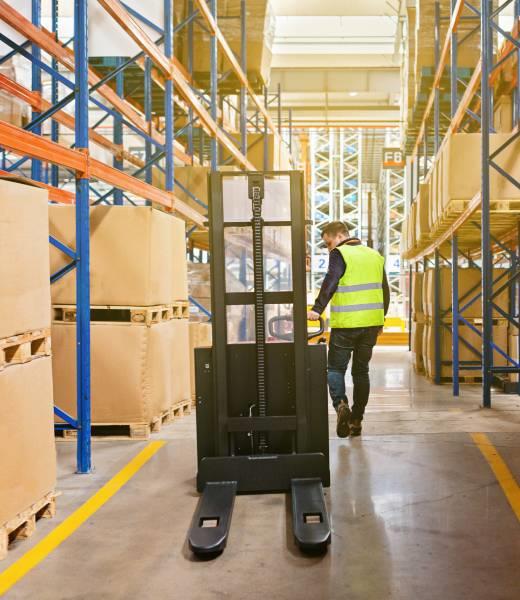
In tight spaces between racks, the risk of the operator getting stuck between the vehicle and the rack (Crushing) is at the highest level. "Turtle Mode" (Slow drive) should be activated in turns. The operator should never get between the vehicle and the rack. Feet should be kept away from the chassis. The battery pallet truck should be used by avoiding sudden accelerations.
Question 4: What Precautions Should Be Taken in the Battery Charging Area?
Gases released during charging in lead-acid battery models can be flammable. The charging area must be well ventilated. Care must be taken against the risk of sparks when making battery connections. In lithium-ion models, the original charger must be used. Care is taken not to crush the cables.
A 2-minute visual and functional check at the start of each shift prevents a major breakdown or accident during the day. This list should be signed by warehouse supervisors.
-
Wheels: Is there any breakage, wear, or entanglement with rope/nylon?
-
Forks: Is there any bending, cracking, or imbalance?
-
Brake System: Does the vehicle stop instantly when the electric pallet truck handle is released?
-
Horn and Warnings: Is the audible warning system working?
-
Emergency Stop Button: Is all energy cut off when the red button is pressed?
-
Hydraulic Unit: Is there any oil leak or leakage?
|
Incorrect Behavior |
Possible Risk |
Correct Practice |
|
Loading at the tips of the forks |
Tipping / Fork bending |
Seating the load fully on the fork |
|
Descending with load facing down on ramp |
Load sliding / Loss of control |
Load must always face uphill |
|
Riding on the pallet truck (Like a skateboard) |
Falling / Foot crushing |
Usage only by walking or on platform |
|
Making sudden and hard turns |
Load skidding |
Reducing speed in turns |
|
Overloading beyond capacity |
Hydraulic explosion / Chassis breakage |
Adhering to the label value |
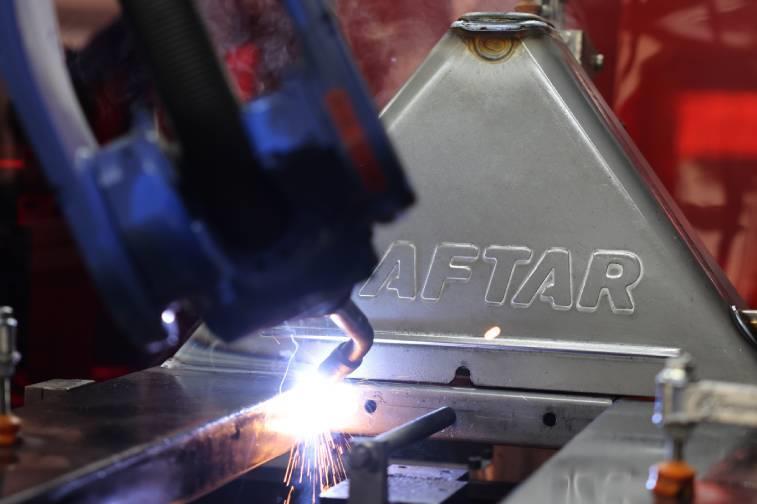
Occupational safety depends not only on the operator's attention but also on the hardware quality of the equipment used. All pallet truck models within Paftar are equipped with electromagnetic brake systems, "belly buttons" (anti-collision switches) that prevent jamming, and reinforced chassis that maintain load balance. Do not risk your personnel's safety while increasing your operational speed. Safe equipment is the cornerstone of a sustainable warehouse.