Equipment Plan for Those Setting Up a New Warehouse: In What Order Should Pallet Trucks, Stackers, and Platforms Be Purchased?
Setting up a new warehouse or designing an existing facility from scratch is the most exciting yet risky stage of logistics operations. The biggest mistake made is usually rushing to buy equipment before the warehouse physics and load profile become clear. The result is either expensive machines sitting idle or wrong choices that lock the operation from day one.
A successful warehouse operation design is based on the principle of "analysis first, then investment". Our goal is to make your warehouse operational from day one with the right equipment order and minimize unnecessary investment risks. Here is the step-by-step warehouse equipment planning map.
1. Step-by-Step Equipment Planning Flow
Before opening the equipment catalog, you must take an X-ray of your warehouse. An ideal planning should follow this order:
1. Needs Analysis and Creating a Load Profile
The question "What will we carry?" is the beginning of everything. The main factors determining equipment selection are:
-
Load Type: Standard Euro pallets, custom-sized crates, or unpalletized boxes? (For unpalletized small loads, solutions like transport trolleys, machine skates, and beam trolleys should be considered from the very beginning.)
-
Weight: What is the maximum and average load weight? (Buying a 2.5-ton machine for a 1-ton operation is an unnecessary cost.)
-
Circulation Speed: How many pallets will move per day? Low density requires manual, high density requires battery-powered equipment.
2. Space, Aisle, and Rack System Analysis
The question "Where will we carry it?" determines the physical limits of the equipment.
-
Aisle Width (AST): How narrow are the aisles? Narrow aisles require compact stackers or special narrow aisle equipment instead of standard forklifts.
-
Ceiling Height and Rack Levels: What is the height of the top rack? This is the most critical data for lifting equipment selection.
-
Floor Condition: Is the floor epoxy or concrete? Is it rough or sloped? This affects everything from wheel selection to the machine's climbing ability.
3. Equipment List and Purchasing Order
When the analyses are completed, it is time to prioritize the equipment with the "waterfall method". The investment should be made from the floor to the ceiling.
Stage 1: The Foundation of the Operation (Horizontal Movement) - Pallet Trucks
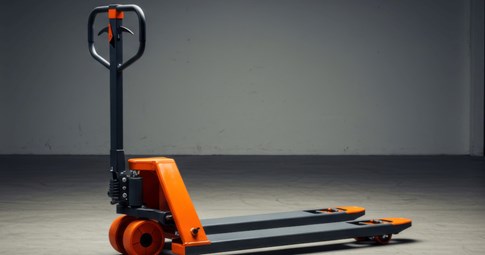
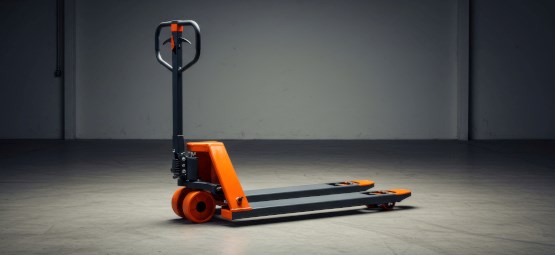
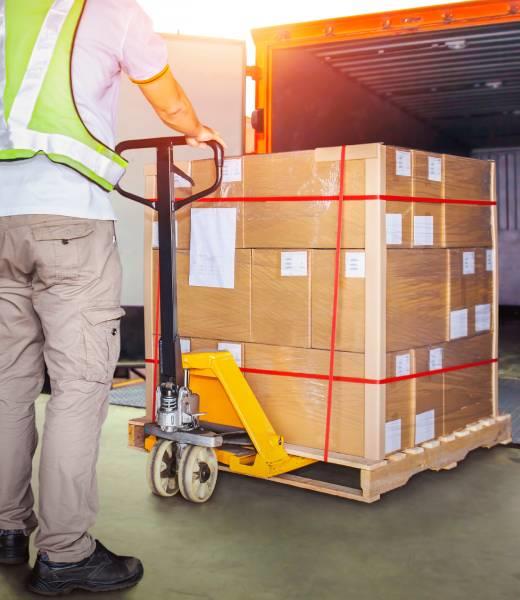
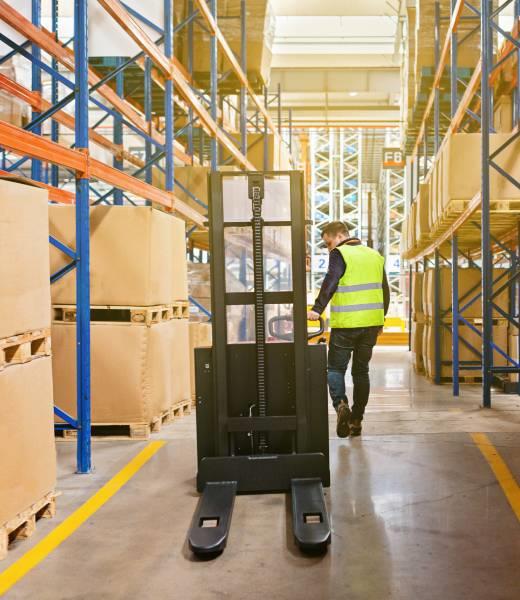
The must-have of every warehouse, the lifeblood of the operation are pallet truck models. Even if the rack system is not installed, you need a pallet truck to carry every load horizontally from goods receipt to shipment.
-
Priority: Very High.
-
When to Buy?: The first day the warehouse door opens.
-
Selection Criterion: If your daily pallet movement is low, manual models should be preferred; if it is busy and there are long distances, battery-powered/platform models should be preferred.
Stage 2: Vertical Ascent Begins - Stackers
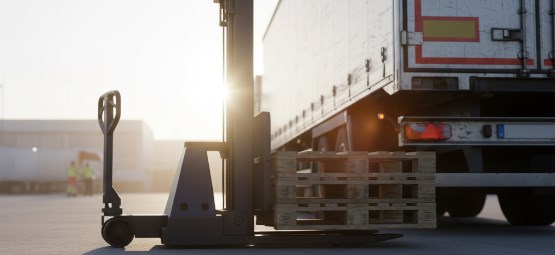
After the floor operation settles and the racks start to be installed, it's time for vertical stacking. This is where the stacker comes into play.
-
Priority: High (In warehouses with racks).
-
When to Buy?: From the moment the first rack upright is erected.
-
Pallet Truck or Stacker?: If you will only carry from the ground, a pallet truck is sufficient. However, if you need to place pallets on the 2nd floor and above, a stacker is essential.
-
Selection Criterion: Semi-electric or manual stackers for infrequent use up to 2-3 meters; fully electric stackers should be selected for higher and busier operations.
Stage 3: High Altitude and Maintenance - Platforms and Special Equipment
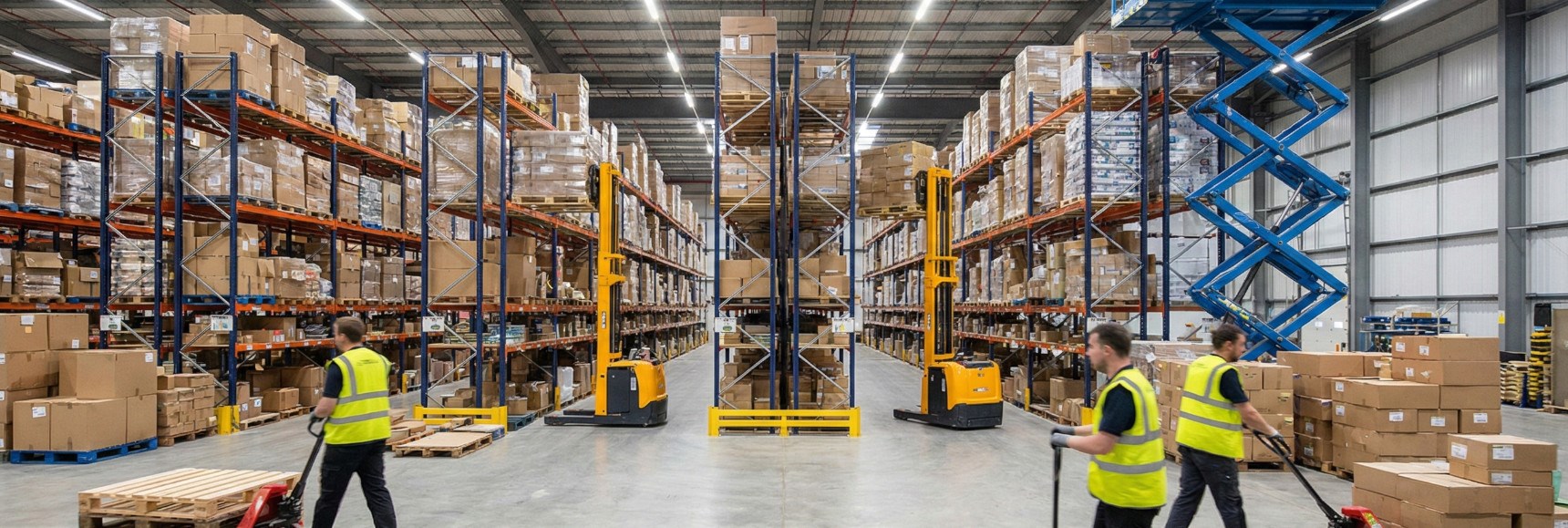
When the warehouse reaches full capacity, needs such as accessing very high racks or installation/lighting maintenance arise. At this stage, personnel lifting platform (manlift) and advanced forklifts come into play.
-
Priority: Medium/Low (For the initial stage).
-
When to Buy?: When the warehouse becomes fully operational and maintenance needs arise.
2. Scalable Sets by Scenario
While doing logistics equipment planning, to protect your budget, you should start with the "Minimum Starter Set" and transition to the "Growth Set" as the business volume increases.
|
Equipment Group |
Minimum Starter Set (Day One) |
Growth and Scaling Set (Future Period) |
|
Horizontal Transport |
1-2 Manual Pallet Trucks
1 Package Transport Trolley |
+ Battery-Powered Pedestrian Pallet Trucks
+ Fast Pallet Trucks with Platform (Ride-on) |
|
Vertical Stacking |
1 Semi-Electric or Manual Stacker (Depending on rack height) |
+ Fully Electric Stackers
+ Reach Truck (For high altitude) |
|
Maintenance/Access |
Rental Solutions or Ladder |
+ Self-Propelled Scissor Lift (Manlift) |
3. Budget and Prioritization Matrix
The matrix below helps you decide by showing how critical each equipment is operationally and its investment cost while making a warehouse investment plan.
|
|
Low Investment Cost |
High Investment Cost |
|
Operationally CRITICAL (Must-Have) |
1st Priority: Manual Pallet Trucks
(Operation stops, buy immediately) |
2nd Priority: Electric Stacker / Forklift
(Essential for racked warehouse, allocate budget) |
|
Operationally SUPPORTIVE (Efficiency Enhancer) |
3rd Priority: Transport Trolleys / Manual Stacker
(Makes work easier, buy at the first opportunity) |
4th Priority: Personnel Platforms / Special Equip.
(Buy when the need arises or business grows) |
4. Maintenance and Service Plan
Buying the equipment is just the beginning. While creating the warehouse setup equipment list, the energy needs of these machines (charging station area), periodic maintenance agreements, and spare part accessibility must also be included in the plan. Unmaintained equipment can leave you stranded on your busiest day.
In conclusion; correct equipment planning is the most important engineering work that determines the efficiency of your warehouse. As Paftar, we are by your side with our expertise throughout the entire process, not only in equipment supply but also from the needs analysis of your warehouse to the creation of the most suitable machinery park.