Manual vs. Battery Stacker in Low Volume Warehouses?
In boutique businesses where daily work volume is limited but heavy loads need to be placed on racks, the technical evaluation between keeping the initial investment cost low and the necessity of operational efficiency is the most strategic decision determining the choice between manual hydraulic systems and motorized lifting technologies. Incorrect choice creates hidden costs. Operator fatigue slows down the work. The right equipment speeds up the process. A manual stacker is an economical start. A battery stacker offers comfort and speed.
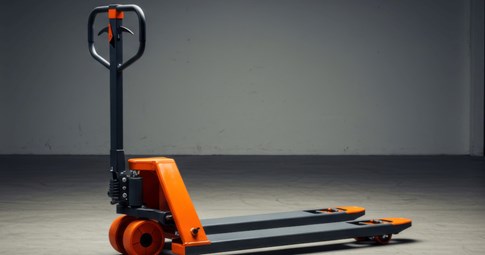
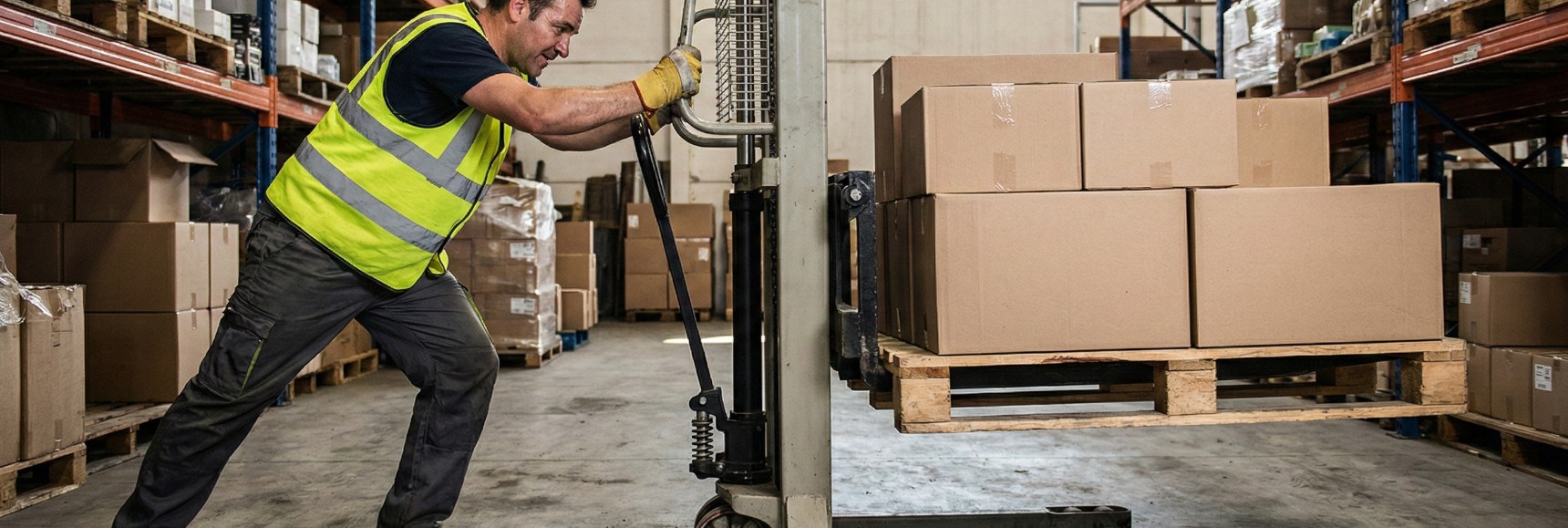
Manual models, where a hydraulic pump handle based on human power is used to lift the load and horizontal movement is provided entirely by the operator's pushing force, are the most practical solution in very small-scale warehouses where there is no electrical installation or charging infrastructure cannot be established. Maintenance cost is almost zero. There is no risk of battery and motor failure. It is ready for use at any time without waiting time. However, it requires physical effort.
At What Threshold Does It Become Inefficient?
Considering that the operator has to pump the hydraulic handle an average of 40-50 times to lift a pallet 1 meter, in cases where daily pallet movement exceeds 10 units, manual use turns into an exhausting process that consumes the physical energy of the personnel and reduces their efficiency in other tasks. Pushing a 1-ton load manually is difficult. As the process lengthens, the risk of error increases. Pumping operations on racks over 2 meters can create occupational safety risks.
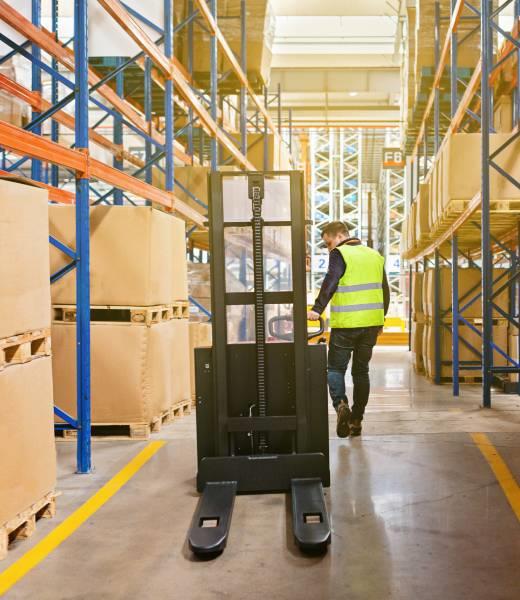
Battery stacker models, where lifting and driving functions are managed by electric motors and the operator can manage tons of loads with millimetric precision using only the buttons on the control handle, eliminate physical effort and raise occupational health and safety standards. Speed is constant. The load lifts without shaking. The operator does not get tired. Stacking time drops to seconds.
Ramp and Ground Factor
Since the lower chassis of manual stackers are very close to the ground and they do not have braking systems, using a manual model in warehouses with a ramp entrance is technically impossible as it brings very serious work accident risks such as the load sliding back and tipping over. If there is a ramp, a battery stacker is essential. Electromagnetic brakes hold the load on the ramp. Climbing ability is provided by motor power.
|
Criteria |
Manual Stacker |
Battery Stacker |
|
Daily Pallet Limit |
Maximum 5 - 10 Pallets |
20 - 50+ Pallets |
|
Physical Effort |
Very High (Muscle power) |
None (Motor power) |
|
Lifting Speed |
Slow (Via pumping) |
Fast (Via button) |
|
Ramp Usage |
Dangerous / Impossible |
Safe and Suitable |
|
Maintenance Need |
Low (Mechanical) |
Medium (Battery and Motor) |
|
Investment Cost |
Low |
Medium / High |
If your warehouse has a flat floor and you only perform rack adjustments 1-2 times a day, the manual solution is budget-friendly. However, if your daily shipment traffic is increasing and you have a goods receiving area with a ramp, the battery stacker investment amortizes itself in a short time by saving on labor costs. Paftar offers certified and durable solutions for both need groups. You can determine the model suitable for your business's growth goals with our technical team.