How to Prevent the Riskiest Scenarios in Load Lifting
In industrial facilities, warehouses, and construction sites, load lifting operations are among the areas where occupational accidents occur most frequently. Moving tons of weight vertically or horizontally can lead to irreversible consequences with the slightest negligence. However, these risks are not "fate"; with the right platform selection, proactive maintenance, and disciplined operation management, even the riskiest scenarios can be completely eliminated.
What are the most dangerous situations encountered in the field, and how are they prevented from a professional perspective?
1. The 3 Most Dangerous Scenarios and Prevention Methods
Risks in load lifting processes generally cluster around three main focal points: Equipment, Load, and People.
1. Unbalanced Loading and Overturning Risk
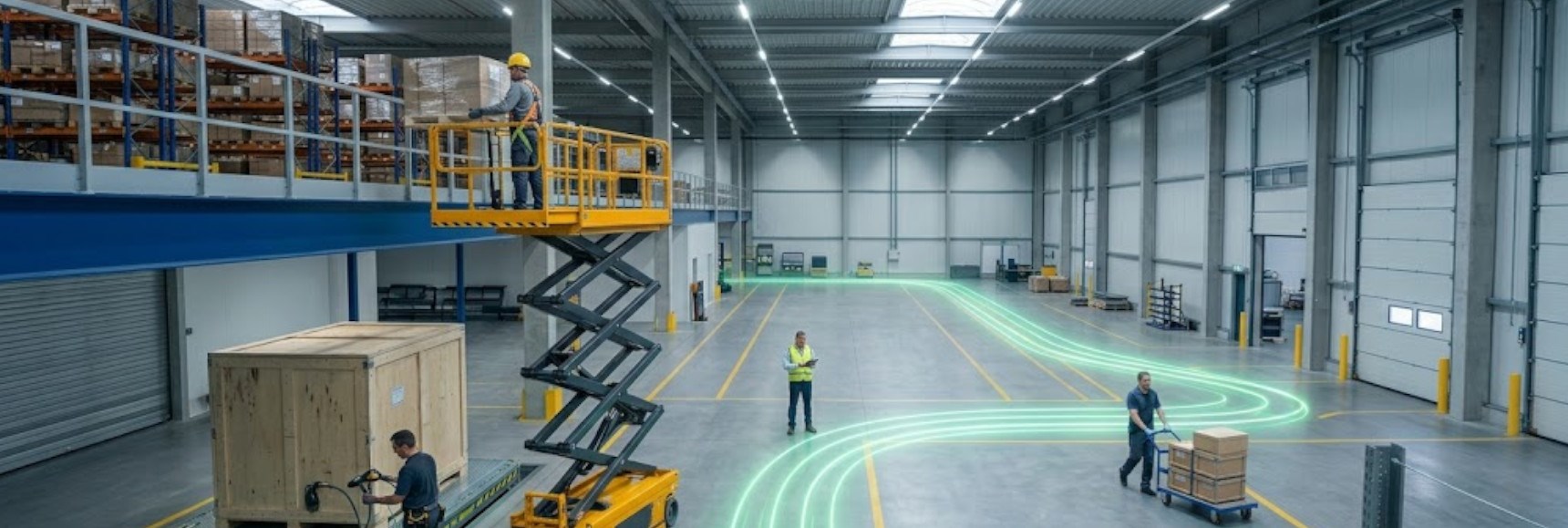
Especially in scissor lift models working at high altitudes, the load not being at the center of the platform or loading above the machine's capacity triggers the risk of overturning.
-
Prevention: Operators must always distribute the load to the center of gravity of the platform. It must be ensured that the machine's "load cell" system is active and gives a warning in case of capacity overruns.
2. Hydraulic Failure and Sudden Falls
The most terrifying scenario for a fixed cargo platform is the platform crashing down rapidly as a result of a hydraulic hose burst or leakage while carrying a heavy load.
-
Prevention: "Hose burst valves" and mechanical safety locks must be used in hydraulic systems. These components ensure that the platform locks instantly in place in case of any pressure loss.
3. Loss of Control During Transport
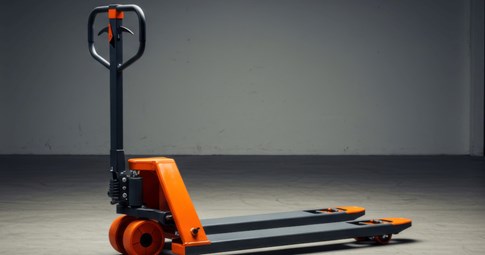
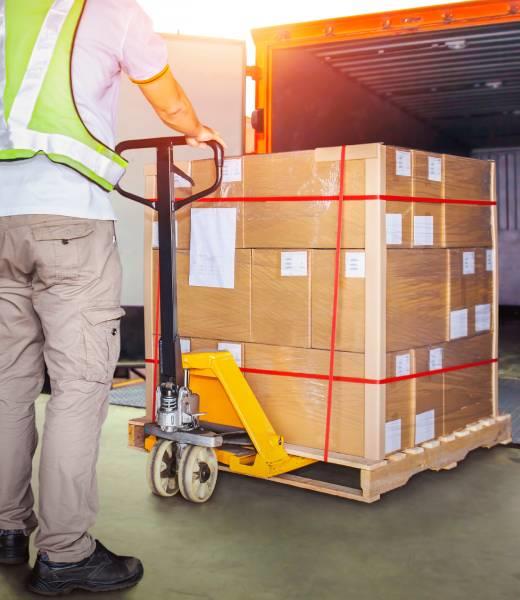
Manual tools used to transfer loads from one point to another on the ground can accelerate out of control or overturn on sloped surfaces. Especially when using a transport trolley, it is critical that the ground is smooth and the load is fixed.
-
Prevention: Wheel selection suitable for the ground structure must be made, and transport solutions with brake systems must be preferred in sloped areas.
2. Safety Matrix: Risk Level and Intervention
You can quickly evaluate how to approach which scenario via the table below:
|
Risk Scenario |
Risk Level |
Critical Preventive Equipment/Action |
|
Capacity Overrun |
Critical |
Load Cell and Warning Sirens |
|
Faulty Ground |
High |
Tilt Sensor and Outriggers |
|
Unmaintained Parts |
Critical |
Regular Periodic Inspection and Lubrication |
|
Untrained Operator |
Medium/High |
Certified Training and Operating Instructions |
3. Make Invisible Accidents Visible: Periodic Inspection
Most accidents actually give signals days in advance. A hydraulic leak, a loosened bolt, or a worn rope can be noticed before an accident occurs if looked at with a careful eye. To achieve the "zero accident" goal in your business, you should include your equipment in a regular inspection mechanism instead of only repairing it when it malfunctions.
Our lifting equipment periodic inspection checklist guide, which includes the controls that your operations team should perform comprehensively before every shift and monthly, is your strongest assistant for minimizing risks.
In summary; risk in load lifting operations is not a possibility, but a process that must be managed. Investing in the right technology and not compromising on safety procedures protects both the lives of your employees and the prestige of your business.