How to Shorten the Weighing Process with a Scale Pallet Truck?
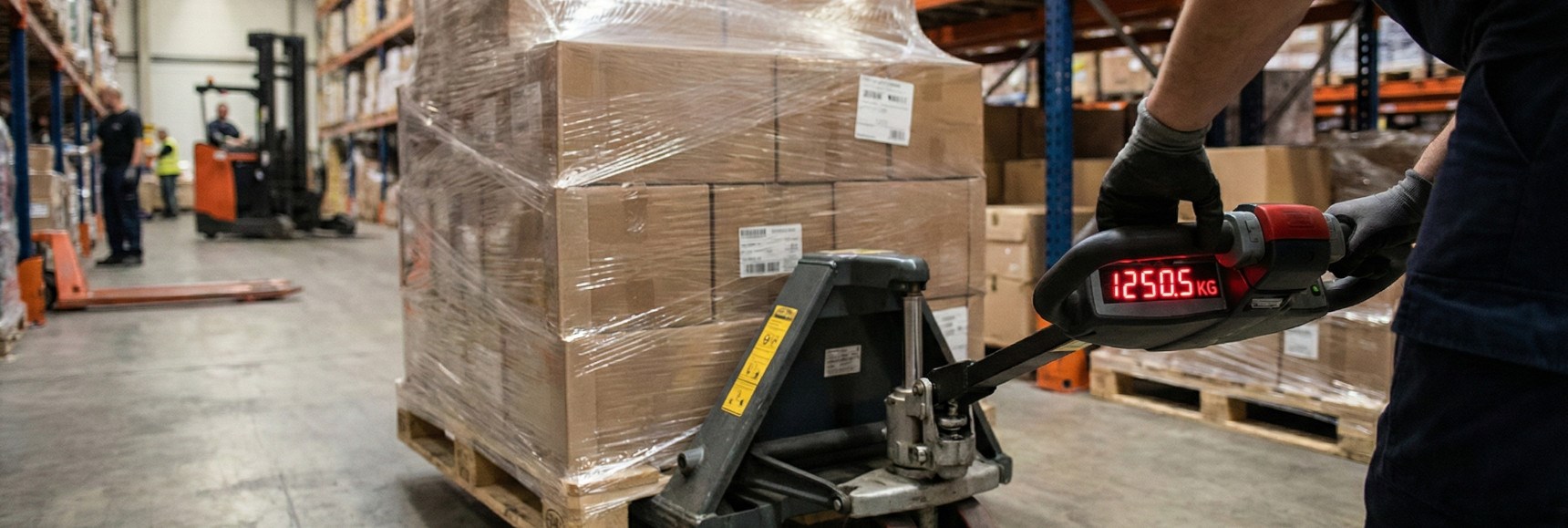
In-warehouse logistics processes, where load weighing operations constitute one of the most critical links of goods reception and shipment stages, increase the operator's walking distance when performed with traditional methods by requiring the pallet to be transported to a central scale every time, creating unnecessary bottlenecks in the workflow and leading to significant time loss. Every pause creates a cost in intensive facilities where material flow must remain uninterrupted. Using a scale pallet truck transforms these static points into mobile measurement centers. Determining the weight of the load the moment it is lifted from the ground maximizes operational efficiency. The round-trip traffic to a fixed scale point is completely eliminated. Personnel focus only on the transport task.
- Working Principle and Precision of Scale Pallet Trucks
- Sectoral Applications: Food, Chemical, and Logistics
- Integration with Battery-Powered and Electric Models
- Scale Pallet Truck vs. Standard Pallet Truck and Fixed Scale
- Which Model Should Be Preferred in Which Scenario?
- Technical Tips for Weighing Efficiency
These devices, which work on the principle of converting mechanical force into electronic signals through high-precision load cells placed under the forks and presenting this data instantly to the operator via a digital screen, bring industrial weighing standards to the warehouse floor with measurement capabilities that can drop to a 0.1% error margin. Measurement precision depends on the quality of the load cell used. Sensors inside the steel chassis detect the load balanced from four points. The indicator unit reflects the data instantly on the digital screen. Functions such as tare and summation facilitate complex shipments. The operator ensures error-free data entry.
Accuracy Class and OIML Standards
OIML certification and "M" approved sealed models, which express the compliance of weight data used for commercial purposes with international legal metrology standards, constitute a legal necessity in invoicing and official reporting processes, raising the data security of the business to the highest level. Standard models are sufficient for internal weighing. Approved devices must be used in purchase-sale processes. Calibration periods protect the accuracy of the device. These certificates are critical in the chemical sector requiring sensitive weighing.
Weighing solutions with scales integrated with stainless steel structures suitable for hygiene standards in food warehouses and ATEX equipment resistant to flammable and explosive environments in chemical plants minimize waste rates by keeping the accuracy of data under control at every stage from raw material entry to final product exit. Goods reception speed increases in logistics centers. Transport penalties arising from incorrect weight declarations are prevented. Recipe tracking in the chemical sector is done while on the forks. Hygienic measurement opportunity is provided in food facilities. Business processes proceed without error.
Process Integration in Logistics Warehouses
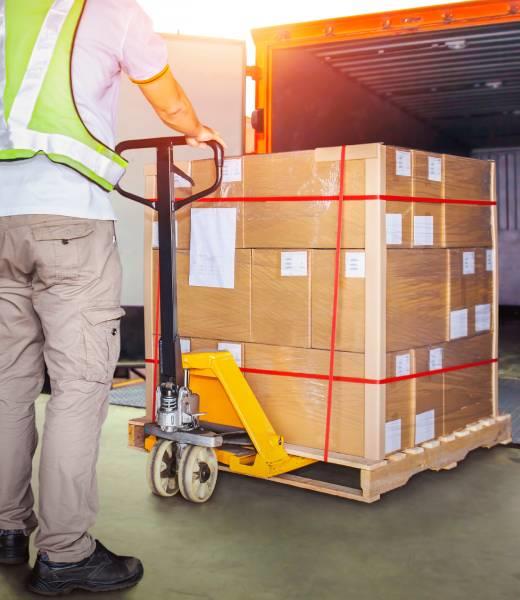
Weighing the load of an incoming truck while it is still being unloaded from the vehicle and processing the data directly into WMS (Warehouse Management System) software provides a control mechanism that immediately stops incorrect product entry and brings warehouse stock accuracy close to 100%. The final check before shipment is completed at this stage. There is no need to allocate a separate scale area. The warehouse floor is used more efficiently. Personnel costs decrease.
When the necessity arises not only to weigh heavy loads but also to transport them without fatigue in long corridors, combining a scale unit with an electric pallet truck chassis protects occupational health and safety by zeroing physical effort and synchronizing weighing speed with motor power. Battery-powered pallet truck models provide uninterrupted weighing all day with their high-capacity batteries. Lithium-ion batteries allow for opportunity charging. The operator moves and weighs tons of load with a single button. The digital screen takes its feed from the vehicle's main battery. Energy management is controlled from a single center.
|
Criterion |
Standard Pallet Truck + Fixed Scale |
Scale Pallet Truck |
|
Processing Time |
High (Scale visit time is added) |
Very Low (Instant weighing) |
|
Maneuver Need |
High (Extra distance covered) |
Minimum (Current route maintained) |
|
Data Accuracy |
Risk of confusion during scale transit |
Clear control on a pallet basis |
|
Labor Efficiency |
Low (Queues may form at the scale) |
High (Independent weighing) |
|
Space Usage |
Special area required for the scale |
No extra space required |
|
Physical Effort |
High (More distance) |
Low (Optimized route) |
If the weighing time per pallet in your business occupies more than 20% of the total operation or if there is serious traffic congestion at the point where the fixed scale is located, switching to a model with a weighing function is the most rational logistics decision that reduces the return on investment (ROI) period to a few months. A scale pallet truck is a necessity in places weighing over 50 pallets daily. Standard precision is sufficient for control purposes only. Approved models should be selected if invoicing is to be done. If the distance is more than 50 meters, an electric pallet truck should be preferred. A battery-powered pallet truck increases speed in high-volume jobs.
Paying attention to floor smoothness and lifting the load in a balanced way by centering the forks perfectly inside the pallet to protect the measurement stability of the device and extend the load cell life is of vital importance in terms of protecting the electronic hardware from mechanical shocks. Weighing results may deviate on inclined floors. The load must always be at the center of the forks. Sudden shocks damage the sensors. Models with printer options facilitate taking outputs. Wireless data transmission allows talking to systems. Paftar offers durable weighing solutions suitable for the intensity of your operation. You can secure your measurements with certified and high-strength devices.
Sectoral Advice: Simply checking your scale pallet truck with a known weight (calibration weight) at the start of each work shift ensures the accuracy of all your shipments during the day.