How to Ensure Safe Working at Heights with a Manlift?
Personnel lifting platforms, designed to minimize the fall risks encountered during processes such as industrial facility roof repairs, exterior assembly, and periodic inspections of high-altitude warehouse racking systems, offer an access technology that combines occupational safety standards with modern engineering solutions by eliminating the time losses and mobility constraints created by traditional scaffolding installations. Working at heights requires serious risk management. Using a manlift is the safest method in this process. Personnel rise within a protected basket. The equipment ensures balance by stabilizing on the ground. The risk of occupational accidents is significantly reduced.
The mechanical configurations of personnel lifting platforms directly affect operational efficiency by exhibiting different kinematic structures based on the physical constraints of the workspace, the bearing capacity of the ground, and the horizontal or vertical orientation of the targeted access point. Incorrect equipment selection leads to access problems. The device suitable for the site must be selected.
Scissor Manlift
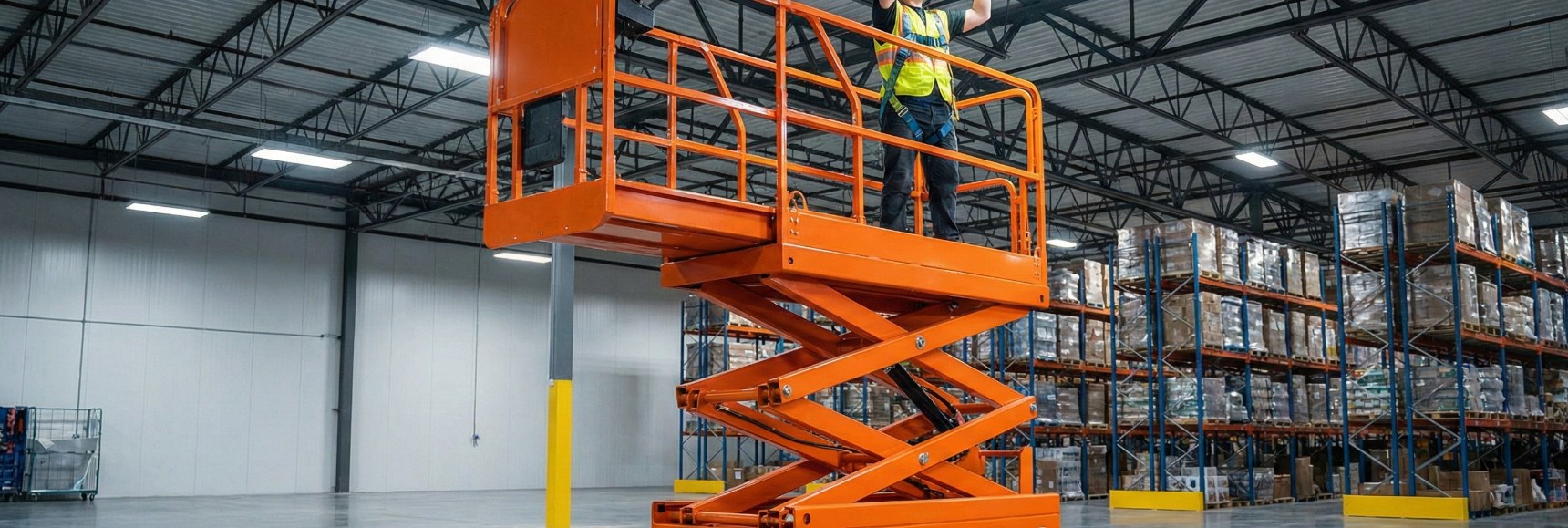
These models, which move only in a vertical direction and raise the platform through cross-scissor arms, are high-capacity systems that allow multiple personnel and heavy equipment to be transported upwards at the same time thanks to their wide basket areas. They offer a wide platform area. Vertical lifting power is high. They are used in facade painting and lighting works.
Articulated Manlift
Capable of overcoming obstacles thanks to the joints in their boom structure, these platforms are flexible solutions that provide horizontal access to difficult points by passing over complex machine lines or pipe installations, especially where obstacles exist at ground level. Horizontal access capacity is high. Maneuverability is advanced. They are preferred for complex assembly works.
Vertical Personnel Lift
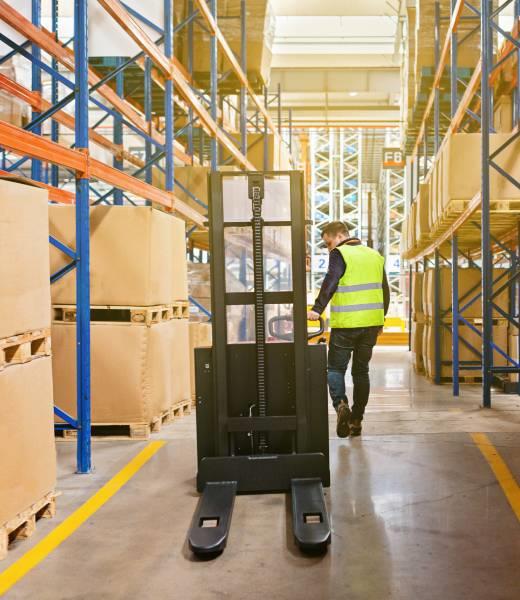
Designed for working in narrow aisles and on sensitive floors, vertical mast models are practical devices that allow the fast vertical access of only one person with their lightweight structures and compact dimensions. Thanks to their small sizes, they can fit into elevators. They are ideal for indoor maintenance. They feature a non-marking tire structure.
Technical parameters to be considered during the equipment investment or rental process are not limited to working height but also require an engineering analysis covering the total weight to be carried by the basket, the slope rate on the ground, and emission constraints in indoor environments. Analysis errors risk occupational safety. Technical data must be examined carefully.
-
Working Height: Calculated by adding the operator's height to the platform height.
-
Basket Capacity: The total weight of personnel, hand tools, and materials must not exceed the capacity.
-
Ground Condition: Rough terrain tires should be selected for outdoors, and solid tires for indoors.
-
Indoor/Outdoor Use: Electric models for indoors and diesel-powered models for outdoors provide performance.
Within the framework of legal regulations, the up-to-dateness of the periodic inspection forms of the equipment and the operator's training certificate in every operation performed at heights create a legal and technical barrier in preventing potential accidents while also certifying the mechanical reliability of the device. Daily checks must be performed at the start of the shift. Emergency lowering systems must be tested. The safety belt must be fixed to the connection point inside the basket. Periodic maintenance should be repeated every 3 months.
|
Feature |
Scissor Manlift |
Articulated Manlift |
Vertical Lift |
|
Direction of Movement |
Vertical Only |
Vertical and Horizontal |
Vertical Only |
|
Platform Capacity |
High (230 - 700 kg+) |
Medium (230 kg) |
Low (120 - 160 kg) |
|
Maneuverability |
Medium |
Very High |
High |
|
Work Area |
Wide and Flat Areas |
Obstructed and Complex Areas |
Narrow and Sensitive Areas |
|
Typical Use |
Panel Assembly, Painting |
Piping Passes, Roofs |
Electrical Maintenance, Cleaning |
Choosing a platform with the kinematic structure most suitable for the characteristics of the operation minimizes the preparation time spent by personnel at the access point, providing time savings of up to 40% in the total duration of assembly and maintenance processes, which directly lowers operating costs. Installing scaffolding takes hours. A manlift is ready in minutes. Personnel reach the target point without fatigue. Workflow continues uninterrupted. Downtimes for repairs are shortened.
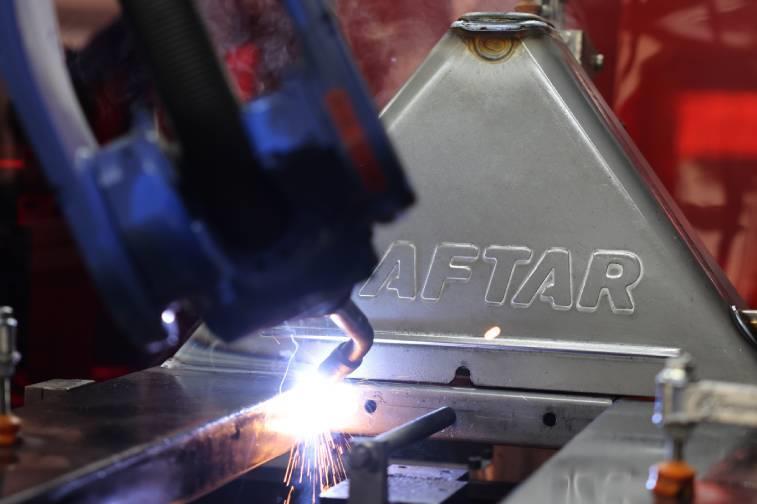
With the engineering support it provides for industrial lifting equipment and personnel lifting groups, Paftar raises occupational safety above legal standards with manlift models having tonnage and height capacities suitable for your business's risk analysis and develops long-lasting solutions that optimize your operational speed. Paftar's product range consists of devices with high safety coefficients. Technical service support is continuous. Access to spare parts is easy. Safe use is supported through operator training.