Green Transformation with Electric Industrial Equipment: Guide to Reducing Carbon Footprint in Warehouses
Industrial facilities and logistics centers constitute a significant portion of global emissions. For businesses, "sustainability" is no longer just a corporate social responsibility project; it has transformed into a necessity that increases operational efficiency. Electric industrial equipment replaces internal combustion engines (diesel/LPG), turning warehouses and factories into quiet, clean, and cost-effective workspaces.
This transformation not only protects the environment but also lowers energy costs and raises occupational safety standards. Here is the technical role of electric pallet trucks, stackers, and other lifting equipment in green transformation.
Diesel forklifts working indoors emit carbon monoxide and particulate matter. This threatens employee health and requires powerful (and expensive) ventilation systems.
Electric pallet truck and stacker models operate on a "Zero Emission" principle. They do not produce exhaust fumes. Using electric equipment is a technical necessity to maintain product hygiene, especially in food, pharmaceutical, and textile warehouses. Switching from diesel to electric saves up to 20% in facility ventilation energy costs.
Traditional motor equipment operates at noise levels of 85 dB and above. This level leads to operator distraction and risk of hearing loss. Battery-powered pallet truck models and stackers with AC motor technology remain at an average sound level of 60-70 dB during operation.
Low noise levels clarify communication within the warehouse. Operators hear warning sounds around them more easily. This is a critical factor minimizing the risk of work accidents.
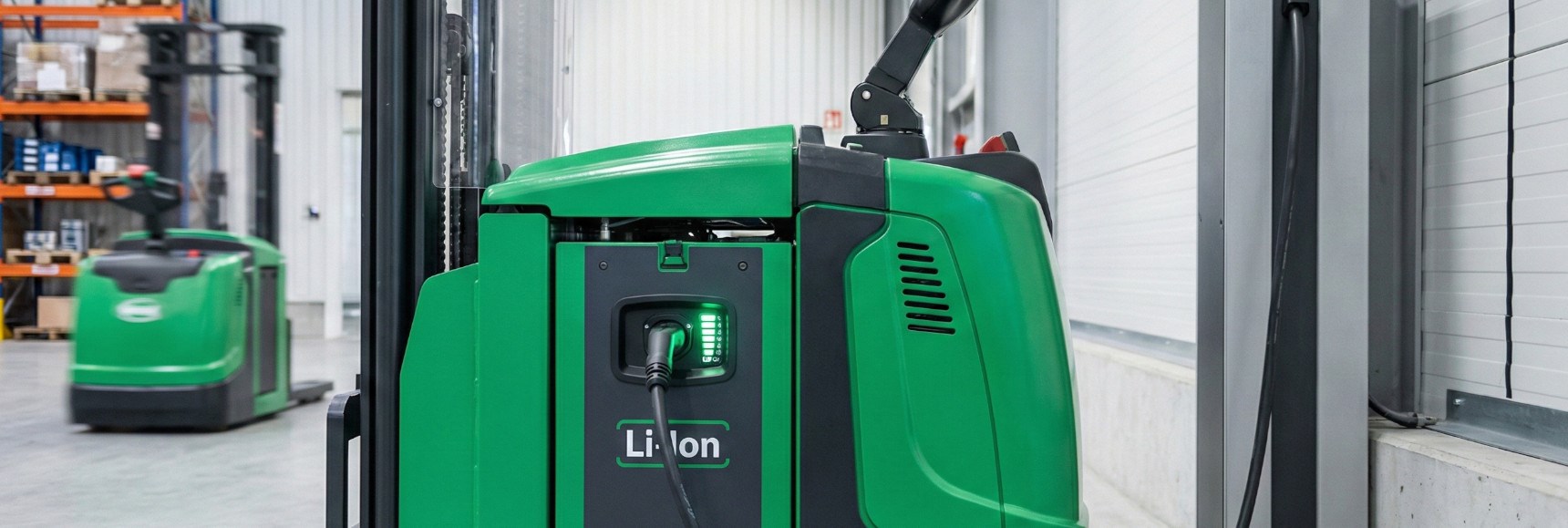
Old-type lead-acid batteries emit gas during charging and require long charging times. However, new generation electric industrial equipment with Lithium-Ion (Li-Ion) batteries offers opportunity charging features.
-
Energy Recovery: Electric stacker models with regenerative braking systems convert kinetic energy into electricity during braking to feed the battery.
-
Maintenance-Free Structure: Li-Ion batteries do not require pure water addition or acid density measurement. This feature eliminates maintenance labor costs.
Green transformation begins with using the right machine for the right task. Electric equivalents now perform every job done by diesel forklifts more efficiently.
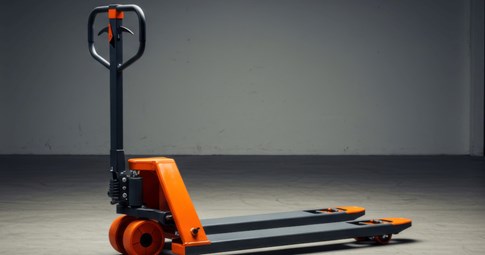
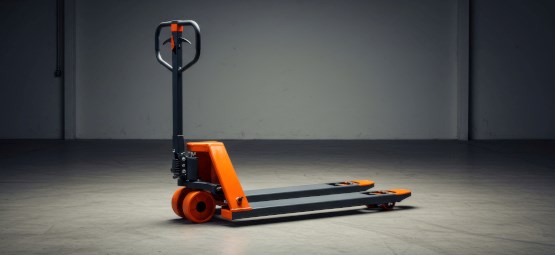
Electric and Battery Pallet Trucks
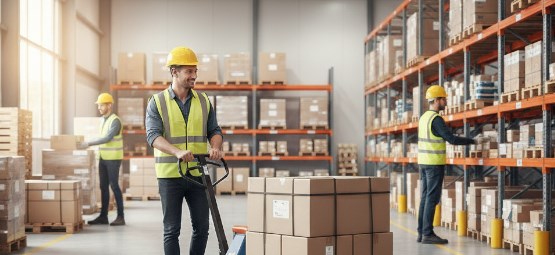
They are the basis of horizontal transport operations. They eliminate the physical load created by manual pallet trucks on the operator. Using a battery-powered pallet truck increases transport speed while optimizing energy consumption. Ideal for loads from 1.5 tons to 3 tons.
Electric Stacker
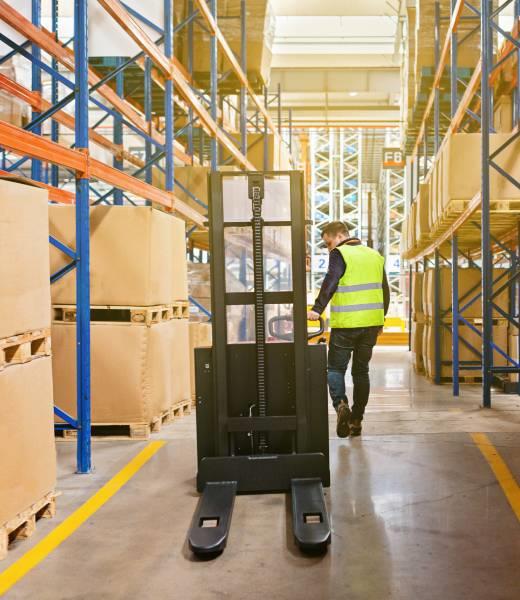
Used for vertical storage in narrow aisles. They have high maneuverability in areas where large forklifts cannot enter. Provides shelf access up to 5-6 meters. It balances the energy spent lifting the load when lowering it.
Mini Cranes and Manlift Solutions
Using an electric mini crane in factory maintenance work or heavy mold changes reduces hydraulic oil leak risks and noise. Personnel lifting platforms (Manlifts) ensure safety when working at heights without polluting indoor air.
Load Platforms
Electric load platform systems should be preferred over hydraulic elevators for material transfer between floors. These systems consume energy only when needed and operate with zero consumption in standby mode.
Every business has different operational needs. The table below shows equipment sets providing optimum energy efficiency according to your business type.
|
Business Type |
Core Need |
Recommended "Green" Equipment Set |
|
Retail Warehouses |
Fast shipment, narrow space |
Battery-Powered Pallet Truck (Li-Ion) + Semi-Electric Stacker |
|
Manufacturing Plants |
Heavy load, maintenance |
Electric Pallet Truck (Platform) + Electric Mini Crane + Manlift |
|
High rack, intense shift |
Fully Electric Stacker (Ride-on) + High-Level Order Pickers |
|
|
Food/Cold Storage |
Hygiene, low temperature |
Stainless Steel Electric Pallet Truck + Cold Store Reach Truck |
The purchasing cost of electric industrial equipment may seem higher than diesel or manual equipment. However, the picture changes when calculating Total Cost of Ownership (TCO).
-
Fuel Savings: Electricity cost is approximately 20% of diesel/LPG fuel cost.
-
Maintenance Expense: Electric motors do not have heavy maintenance items like filters, oil, or belt changes. Maintenance costs drop by 60%.
-
Machine Life: Vibration-free operation reduces chassis and component fatigue, extending the economic life of the machine.
Green transformation in warehouses and factories is an economic strategy, not just an environmental choice. Electric pallet truck and stacking solutions erase carbon footprints while pushing business profitability upward. Paftar leads the efficiency-focused transformation of your facility with its wide range of electric equipment and technical consulting services. Prepare your operations for the future with high energy efficiency, maintenance-free solutions.