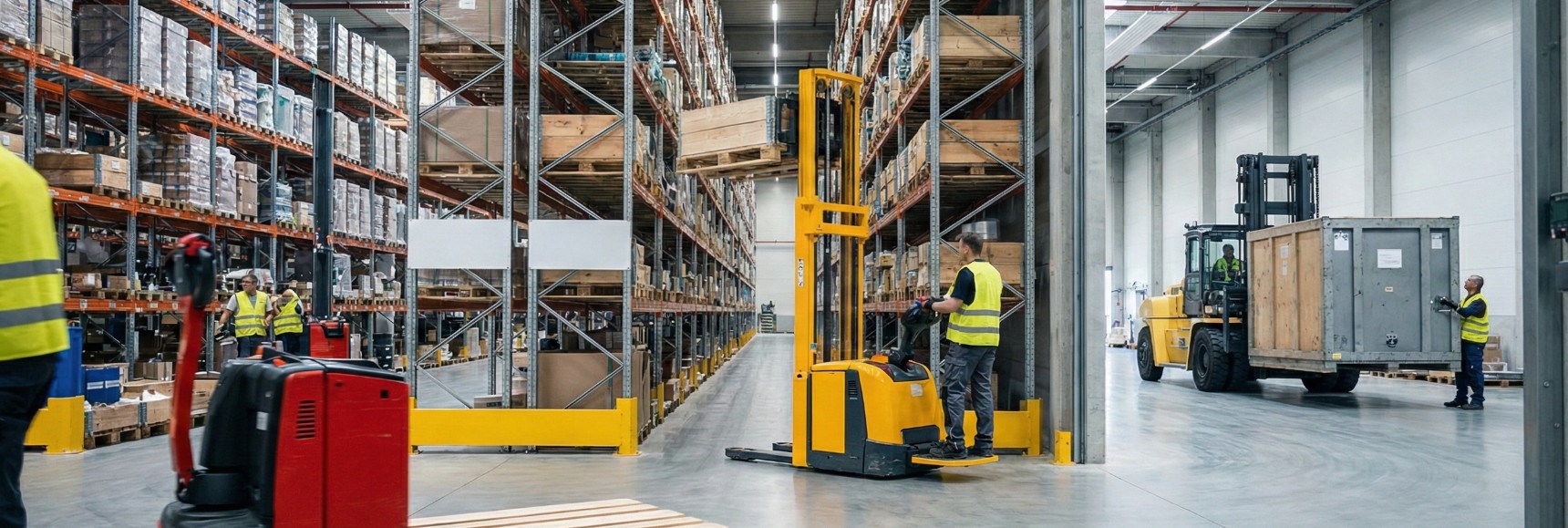
Warehouse Aisle Width Calculation: Pallet Truck, Forklift, or Stacker?
The most fundamental way to maximize storage capacity in logistics centers and production facilities is to narrow the gaps between rack systems to the optimum extent without compromising operational safety. However, an incorrectly planned warehouse layout plan leads to equipment hitting the racks, slowing down material transfer, and causing serious occupational accidents. At this point, warehouse aisle width calculation (AST - Aisle Stacking Width) formulas directly determine the type of lifting equipment to be invested in. The turning radius, maneuverability, and chassis structure of the device to be selected are the keys to your space efficiency. While creating the machinery park suitable for your operations, having knowledge about industry solutions for lifting equipment is the first step to the right investment.
1. Basic Parameters Determining Aisle Width (AST)
A flawless distance between racks calculation process relies not only on the physical dimensions of the machine but also on the dynamics of the carried load and the safe working margin of the operator.
-
Pallet Size and Load Length: Standard Euro pallets (800x1200 mm) or special industrial pallets change the total length of the machine while on the forks.
-
Turning Radius (Wa): It is the radius of the minimum circular area required for the equipment to rotate around its own axis when fully loaded.
-
Equipment Width (b): It is the widest point of the machine from the outside. It is essential to know to prevent friction when passing between racks.
-
Safety Margin (a): It is the mandatory safety gap (usually a total of 200 mm) added to both sides of the aisle to tolerate operator error or load slipping during maneuvering.
2. Step-by-Step Warehouse Aisle Width Calculation Flow
With a practical approach, you can measure the aisle requirement of your own warehouse with these steps:
-
Examine Equipment Data: Find the "Wa" (Turning Radius) value from the technical sheet of the machine you will purchase.
-
Add Load Length: Determine the maximum pallet length you will carry on the forks (e.g., 1200 mm).
-
Include Safety Margin: Add a standard 200 mm (0.2 meters) as a maneuvering margin.
-
Apply the Formula: AST = Wa + Load Length + Safety Margin. The resulting figure should be the net clearance between your racks.
If you are setting up a facility from scratch, you can utilize our warehouse lifting equipment planning guide to place these calculations into a more comprehensive strategy.
3. Equipment Selection for Narrow Aisle Warehouse Solutions
Once the aisle distances in your facility become clear, selecting the mechanism that will work with maximum efficiency in these areas increases your competitiveness. Which device should you use in which aisle?
Pallet Trucks: Maximum Maneuverability
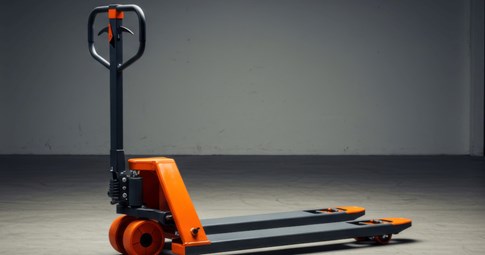
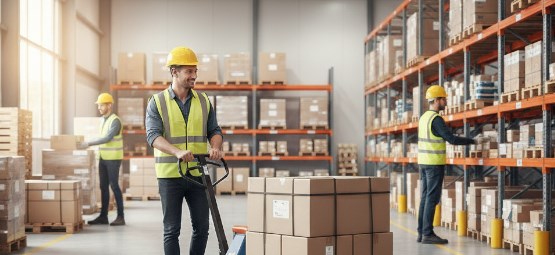
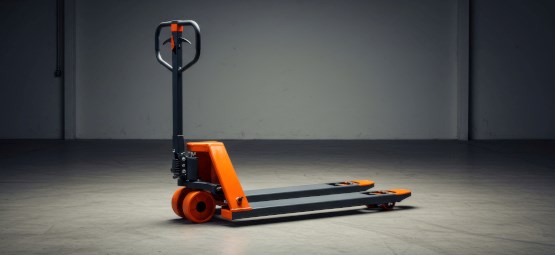
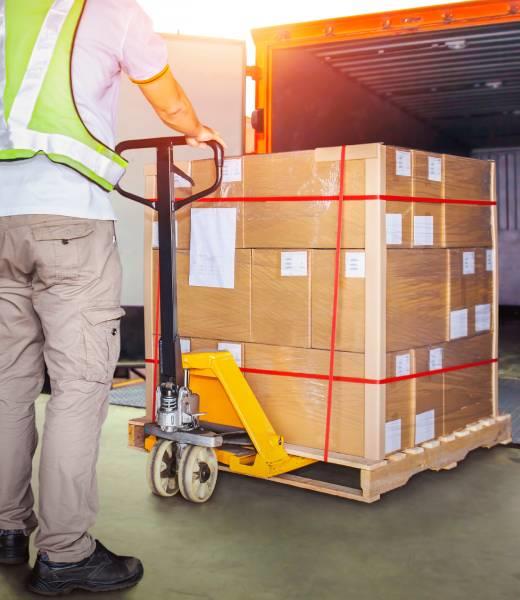
These vehicles, indispensable for horizontal load transfer, show excellent performance even in very narrow spaces. The average pallet truck aisle width requirement varies between 1.8 and 2.2 meters. If you want to minimize human power and increase transfer speed, you can evaluate motorized solutions in the Paftar pallet truck product range. Especially in narrow and busy aisles, the ET15E electric pallet truck multiplies operational speed by offering high maneuverability, while in sectors where special low-profile pallets are used, TP10L low chassis pallet truck models allow you to carry loads with narrow bottom clearance without any problems.
Stackers: Vertical Space and Narrow Aisle Champion
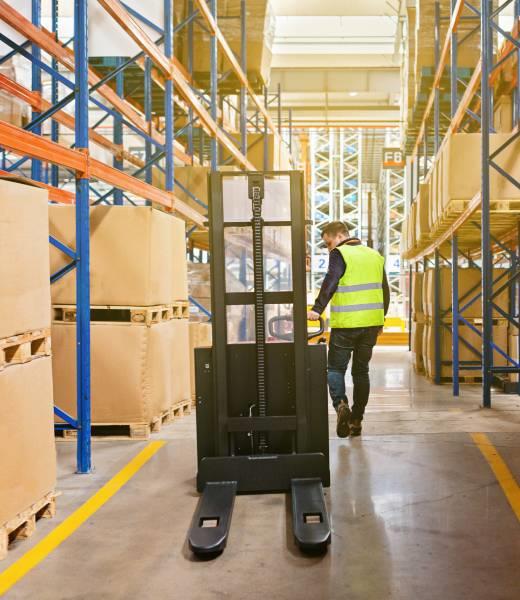
These systems, capable of both horizontal transport and vertical rack stacking, and much more compact compared to forklifts, are tailor-made for narrow aisle warehouse solutions. The average stacker aisle width requirement is between 2.1 and 2.6 meters. To see the capabilities of high-efficiency systems, you can review our battery-powered stacker options.
In the Paftar stacker category, the MS1516 manual stacker offers a practical solution for boutique warehouses wanting to keep investment costs low; whereas, in professional facilities with high daily pallet mobility, the ES1516E electric stacker, which zeroes operator fatigue, passes smoothly between racks with its outstanding success in narrow-angle turns.
Forklifts: Open Area and High Tonnage
Forklifts come into play when shipping heavy tonnage industrial materials and very high rack systems are involved. However, this power has a price: The average forklift aisle width requirement needs a large area like 3.5 to 4.5 meters (depending on the device type). Although diesel forklift models used in open areas, ramp operations, and wide loading areas form the backbone of outdoor logistics, they are not an efficient choice for narrow aisles indoors.
4. Equipment-Based Aisle Width Recommendation Table
|
Equipment Type |
Average Aisle Requirement (AST) |
Main Advantage |
Ideal Usage Area |
|
Manual/Electric Pallet Truck |
1.8 m - 2.2 m |
High maneuverability in narrow space |
Ground level transfers, shipping prep |
|
Pedestrian Controlled Stacker |
2.1 m - 2.6 m |
Extra rack space gain by narrowing aisles |
Mid-height racks, narrow warehouse plans |
|
Industrial Forklift (Diesel/Battery) |
3.5 m - 4.5 m |
High tonnage and multi-level rack access |
Wide areas, outdoors, heavy industry logistics |
5. Frequently Asked Questions (FAQ)
1. What is the best equipment to save space in my narrow aisle warehouse?
The most successful equipment in space optimization are pedestrian-controlled stackers and electric pallet trucks. Because their chassis are much more compact and their turning radii (Wa) are smaller compared to forklifts, they allow you to position the racks closer to each other.
2. How much should the safety margin be when calculating AST (Aisle Width)?
According to international standards and safe maneuvering rules, it is recommended to add a minimum of 200 mm (0.2 meters) safety margin in total, 100 mm for each side of the aisle, on top of the calculated net area. This margin tolerates possible operator errors and load slips.
3. How much warehouse space do I gain if I use a stacker instead of a forklift?
While a standard counterbalance forklift requires an average aisle between 3.5 and 4 meters to operate comfortably, pedestrian-controlled stackers can complete the operation in an area of around 2.5 meters. This means you gain an average of 30% to 40% extra storage volume by tightening the racks in your existing warehouse.
Utilizing the physical conditions of your facility in the most efficient way and investing in the right equipment will directly increase your warehouse profitability.