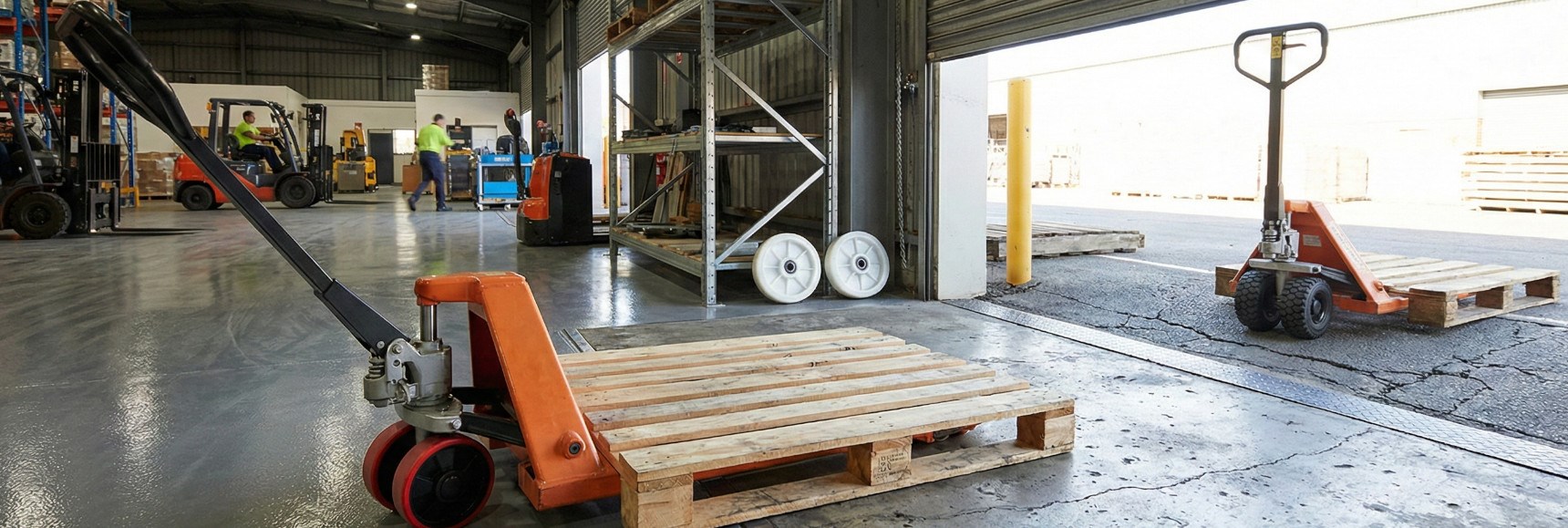
Pallet Truck Wheel Selection: Polyurethane, Nylon, and Rubber Comparison by Floor Type
In industrial logistics operations, the material structure of the wheel equipment, which is the only point of contact with the surface for the equipment that ensures the safe movement of tons of loads on the floor with manual or battery-powered pallet truck systems, stands out as a critical engineering component directly affecting all logistics processes, from carrying capacity to the pushing force exerted by the operator and the protection of the floor coating. Incorrect wheel equipment slows down the operation instantly. The operator experiences a great physical difficulty. Correct material selection reduces personnel fatigue. The Paftar pallet truck product range is offered with configurations suitable for different industrial floor needs. Making a match suitable for the floor structure brings the failure rate down rapidly. Transport efficiency remains high all day.
1. Pallet Truck Wheel Materials and Mechanical Properties
Material types in polymer, elastomer, and composite structures constituting the travel assemblies of lifting vehicles used in heavy industrial facilities and logistics warehouses exhibit completely different dynamics from each other in terms of surface friction coefficients and shock absorption capabilities, and are specially formulated to show maximum performance under specific factory floor conditions. Material type determines the rolling resistance primarily. Load distribution performance changes according to this structure. Pallet truck wheel materials determine the service life of the equipment directly. Steel-cored models support heavy tonnage. The correct chemical structure prevents the wheels from disintegrating quickly.
Polyurethane Pallet Truck Wheel: Silence and Floor Protection
These travel elements, consisting of a polyurethane elastomer layer injected under high pressure onto a steel or cast center core, combine high load-carrying capacities with excellent elasticity, offering the most efficient technical solution for absorbing vibrations on hard floors and creating a silent operational environment. Polyurethane material is highly flexible. It absorbs mechanical shocks very well. It is the most ideal equipment for epoxy surfaces. The answer to the curious question "does a loaded pallet truck wheel leave marks?" is absolutely no for polyurethane models. It is safely preferred in ceramic and tile-covered areas. It works very silently. It completely prevents noise pollution occurring in night shifts. It protects the surface against scratches.
Nylon Pallet Truck Wheel: Low Friction and Heavy Load
These equipments, manufactured from a single-piece cast polyamide material and showing minimum deformation under heavy loads thanks to their structural hardness, are superior industrial components that minimize the dynamic friction coefficient with the floor, allowing the operator to accelerate even very high-tonnage pallets with minimum muscle power at the moment of initial movement. Nylon material is extremely hard. Rolling resistance is at the lowest level in the market. It advances easily on rough concrete floors without getting stuck. A nylon pallet truck wheel is highly resistant to aggressive chemicals. It never rusts in wet and humid environments. It works without wearing out in slaughterhouses and acidic production facilities. Its biggest disadvantage is making loud noise. It does not absorb shocks on the surface.
Rubber Pallet Truck Wheel: Shock Absorption and Outdoors
These thick-profile models, obtained by coating natural or synthetic elastomer dough onto aluminum or sheet metal rims through special vulcanization processes, are flexible equipments that perfectly dampen mechanical shocks on rough and uneven outdoor floors, preventing damage to the sensitive load carried and minimizing metal fatigue on the chassis. Rubber material provides maximum adhesion to the surface. It is fully compatible with outdoor uses. It shows high performance on asphalt floors. It cuts the vibration occurring on bumpy and uneven roads. It prevents the operator from slipping on wet floors. Using a rubber pallet truck wheel increases the pushing power need due to high friction. It can tire the operator over long distances. It can leave black friction marks on light-colored floors.
2. Wheel Selection Optimization According to Warehouse Floor
Ensuring the correct match between the physical properties of the floor covering constituting the architectural structure of your enterprise and the chemical structure of the logistics equipment travel group is a highly strategic facility planning step that ensures the uninterrupted continuation of the material flow by eliminating failure-based downtimes and directly protects the annual maintenance budget. Floor type dictates the wheel type. Incompatible equipment shreds the wheel in a short time. Using nylon on an epoxy floor creates permanent scratches. Industrial guidelines in our article on effective methods to sustain your pallet truck long term must be followed to reduce the need for regular maintenance and protect the equipment. Correct wheel selection according to warehouse floor lowers spare part costs. Unnecessary energy loss caused by friction is prevented.
Practical Matches by Floor Types
When the floor dynamics in the specific working areas needed by different industrial sectors are examined in detail, it is clearly observed that selecting the wheel material in accordance with the operational characteristics maximizes the material feeding speed on the production line and extends the economic life of expensive floor covering investments. Polyurethane must be used on sensitive epoxy floors. The floor stays smooth this way. Nylon wheels must always be selected on industrial rough concrete. Great pushing ease is provided to the operator. Durable polyamide derivatives should be preferred on grated floors. Rubber models save lives on asphalt and difficult outdoor areas. Vibration and shaking are prevented.
3. Operator Ergonomics and Pushing Force Dynamics
Since the dimensions of the physical stress exposed to logistics personnel while manually moving tons of weight all day increase exponentially depending on the rolling resistance of the wheels on the floor, using low-friction materials suitable for the environment is a preventive occupational health and safety move that minimizes musculoskeletal system disorders. Wheel selection determines the end-of-day fatigue. Nylon wheels greatly reduce the initial push force. Personnel exert less effort on heavy pallets. Polyurethane wheels offer a smooth and comfortable ride. Offering wheel configurations perfectly suited to factory floor standards in Turkey is among the advantages of locally produced pallet trucks. Human and machine harmony is caught easily. Work efficiency remains high until the end of the shift.
4. Pallet Truck Wheel Selection Comparison Table
You can quickly identify the polymer or elastomer structure most suitable for your needs through this detailed technical table we prepared so that you can integrate the travel group performance data shaped according to different floor conditions and sectoral expectations into the logistics planning of your enterprise. Examine the features from the table. Select the correct equipment easily.
|
Feature / Material |
Polyurethane Wheel |
Nylon (Polyamide) Wheel |
Rubber Wheel |
|
Ideal Floor Type |
Epoxy, Tile, Sensitive Surface |
Concrete, Grate, Cement |
Asphalt, Stone, Rough Outdoor |
|
Rolling Resistance (Ease of Push) |
Medium |
Very Good (Lowest friction) |
Low (Requires more effort) |
|
Floor Protection and Marking |
Excellent (No marks, no scratches) |
Low (May scratch sensitive floor) |
Medium (May leave marks on light color) |
|
Silent Operation Performance |
Very Good |
Poor (Works noisily) |
Excellent |
|
Shock and Vibration Absorption |
Good |
Poor |
Very Good |
|
Chemical and Water Resistance |
Medium |
Very Good (Wet floor, acid) |
Medium |
|
Wear Resistance |
High |
Very High |
Medium |
5. Periodic Maintenance and Wheel Life Extension Strategies
Visual inspections carried out at periodic intervals to preserve the mechanical integrity of the travel assemblies and prevent the locking of the bearing systems, and cleaning protocols that prevent foreign materials in the environment from getting tangled in the wheel axles, are the most fundamental preventive maintenance procedures that ensure the smooth operation of the equipment under heavy industry conditions. Stretch films tangled in the wheels must be cleaned immediately. Wooden pallet splinters scratch nylon wheels over time. Chemical spills on the floor damage the polyurethane structure. Bearing systems must be lubricated with grease regularly. Worn front wheels are always replaced in pairs to maintain balance. The load pressing on one side is prevented. Keeping this selection clean is as critical as making the correct pallet truck wheel selection.
You can quickly contact our expert technical team via the Paftar contact page to determine the travel equipment most suitable for the floor conditions, ramp slopes, and the tonnage of the load you carry in your enterprise.