Effective Methods to Sustain Your Pallet Truck Long-Term
They provide efficiency and productivity to their users as long as they remain operational. Most pallet trucks fail due to numerous, unseen, minor issues that occur over time. Following some basic and simple maintenance methods can assist in providing your pallet truck with many years of reliable operation.
Below are five basic maintenance procedures that will help prolong the operational service of your pallet truck.
- Keeping It Clean: A Key Component of Service Life
- Hydraulic System: The Core of All Pallet Trucks
- Wheels and Bearings: Small Details That Make a Large Difference
- Safe Operation Requires Secure Fasteners
- Human Factor: Proper Usage Is a Major Maintenance Technique
- Conclusion: Maintaining Equipment Reliability Begins With Adherence to a Disciplined Process
One of the first rules of maintenance is to simply keep it clean.
Dust, oil residue and debris do not appear to be harmful; however, they decrease the lifting force of the pallet truck over time and wear-out the moving components of the truck.
Paftar Tip:
Use a damp cloth to wipe down the frame, forks and wheel housings after each shift. Do not use a spray nozzle, which can damage the bearings and seals on the pallet truck.
Daily cleaning for only a few minutes can prevent costly repairs in the future.
The hydraulic system is what enables your pallet truck to lift and lower the loads placed upon it.
Contaminated oil, low fluid levels, and other issues can cause decreased lifting performance and/or leakage of the hydraulic system.
Regular Checks:
- Check the hydraulic oil level every three months (more frequently for extreme usage).
- Change the hydraulic oil if it is cloudy, dark, or has foam in it.
- Check regularly for oil leaks at the pump, piston, and seals.
Paftar Engineering Fact:
Our hydraulic systems are designed to withstand more than 100,000 lifting cycles in industrial environments.
Appropriate maintenance will enable you to achieve (and sometimes surpass) this standard of durability.
The wheels are the interface between the pallet truck and the ground — and the first component to show signs of wear.
Signs include flattened areas, cracks or unusual noises when rolling.
Checkpoints:
- Inspect the wheels weekly for wear or distortion.
- Listen for unusual noises when the pallet truck rolls — signs of worn bearings.
- Choose a wheel type matching the flooring surface: Polyurethane wheels for smooth floors, nylon wheels for rougher surfaces.
Paftar Insight:
A 10% increase in rolling resistance results in a 30% greater energy loss and increased wear of the pallet truck.
Wheels with less friction equal more efficient operation.
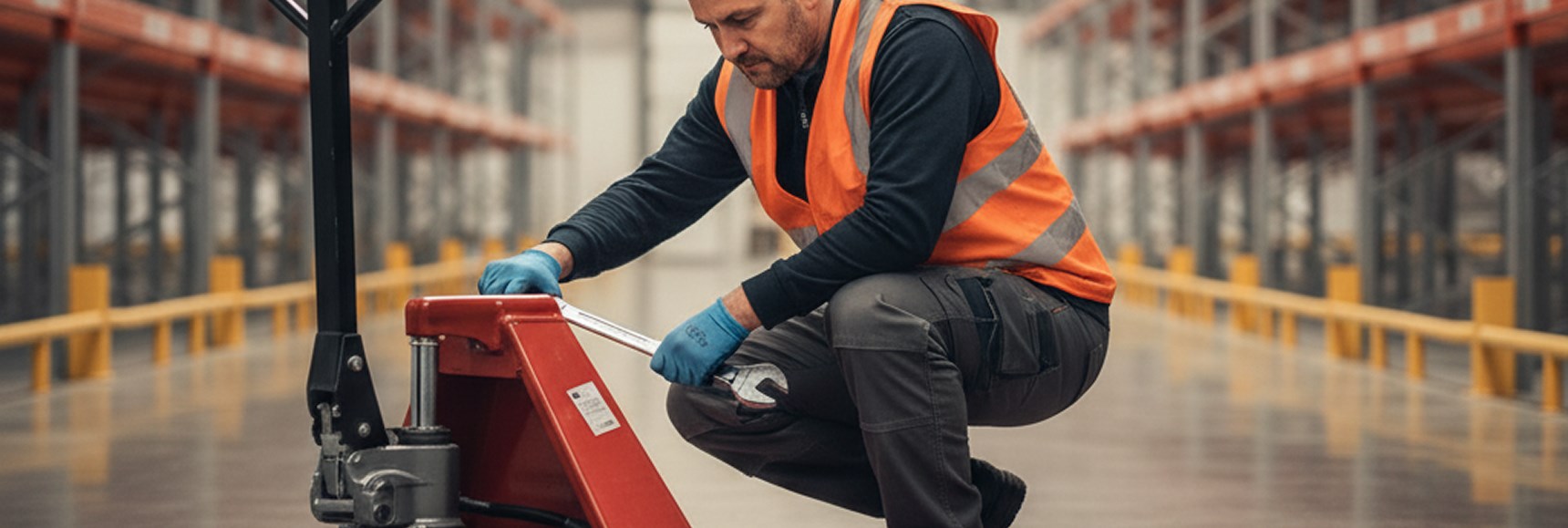
Every pallet truck is composed of multiple mechanical components that operate together.
Even one loose bolt can create misalignment, noise and unsafe operating angles.
Inspection Schedule:
- Tighten all bolts, nuts, and axle connections monthly.
- Be sure to pay particular attention to the handle base, pump mounting area and fork pivot points.
- Do not use the pallet truck if it rattle's or produces clicking noises.
Paftar Safety Standard:
Each pallet truck manufactured by us undergoes a series of vibration tests prior to being shipped from our factory.
Maintaining consistent tightening practices in the field preserves that quality.
Maintenance is not just mechanical — it is behavioral.
Operators who understand the operation of the pallet truck will naturally take better care of the equipment.
Training Reminders:
- Do not exceed the maximum weight limit of the pallet truck.
- Avoid rapid lifting or tugging motions.
- Push the pallet truck and avoid dragging it.
Paftar Recommendation:
Host at least one training session per year for your operators.
This will generate value in the form of extended equipment life, reduced number of breakdowns and safer working conditions.
Maintenance is not a reactive process — it is a preventive one.
By adopting these five steps into your regular maintenance routines, you will not only extend the life of your pallet truck but also:
- Minimize downtime,
- Decrease repair costs, and
- Increase the general safety of your workplace environment.
Paftar does not merely produce pallet trucks — it manufactures long-lasting tools for Turkey's industrial future.
With proper maintenance, these tools will continue to drive your company forward for years to come.