Differences Between Electric and Manual Pallet Trucks
Choosing the right equipment in warehouse logistics directly affects operation speed and costs. Businesses usually focus on the initial investment cost. Operational efficiency and long-term return on investment (ROI) analyses are often ignored. The choice between the two pallet truck types depends on the business volume and physical conditions rather than the budget. Manual and electric models are vehicles with different technical infrastructures serving different needs.
The basic task of pallet trucks is to transport palletized loads on a horizontal plane. The way this process takes place varies according to the power source used.
Hydraulic System and Physical Power in Manual Models
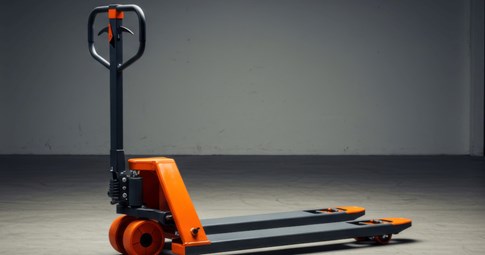
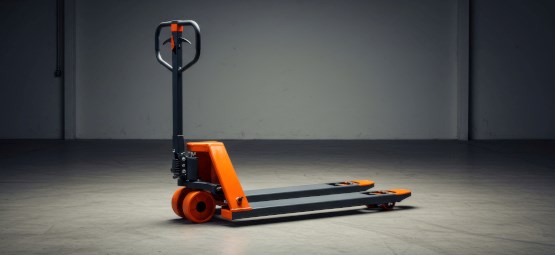
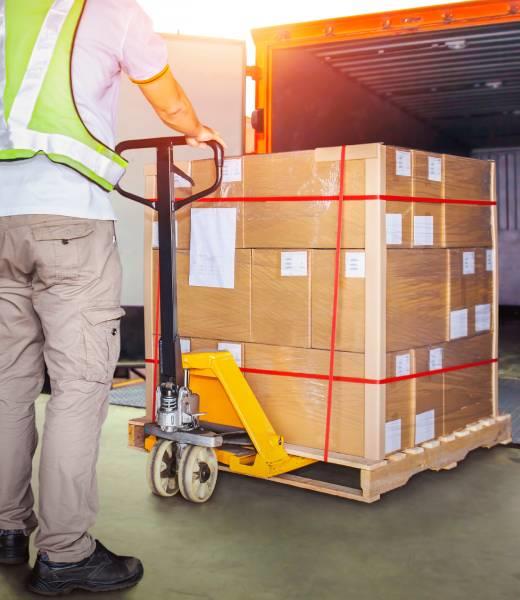
Manual pallet trucks are mechanical systems that work entirely with human power. Lifting is based on the principle of the hydraulic pump engaging as the operator moves the handle up and down. The pulling force required to move the load varies according to the weight of the pallet and the structure of the floor.
These models do not have electronic components. It consists of a simple hydraulic pump, chassis, wheels, and steering handle. Technical simplicity reduces the risk of malfunction. During the initial movement (start-up torque) of heavy loads, the operator must apply serious physical force.
Battery Technology and Motor Power in Electric Models
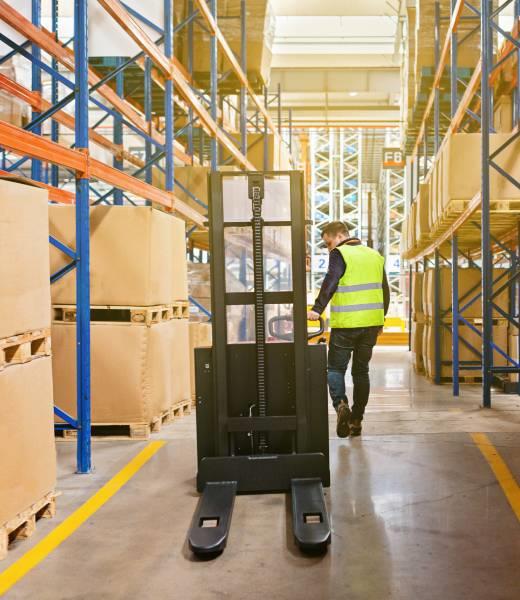
Electric pallet trucks use electric motors for walking and lifting functions. Lead-acid, gel, or lithium-ion batteries are preferred as energy sources. The operator does not expend physical energy to lift or move the load; all operations are managed with buttons on the control handle.
AC (Alternating Current) motor technology found in modern electric models reduces maintenance needs thanks to its brushless structure. Lithium-ion battery models support uninterrupted operation in shift systems by offering opportunity charging. Intelligent control units automatically adjust acceleration and braking ramps.
Initial purchasing cost is not the only criterion in equipment investment. Total cost of ownership and operational speed determine the profitability of the business.
Load Capacity and Speed Comparison
Manual pallet trucks generally have a carrying capacity between 2000 kg and 3000 kg. Although the capacity is high, transporting loads over 1000 kg manually over long distances is inefficient. Human walking speed decreases under load. Operation time extends.
Electric pallet trucks are produced in capacities of 1500 kg and over 3000 kg. Even under load, they easily reach speeds of 4-6 km/h. In warehouses with long corridors, the tour time of electric models is 50% shorter than manual models. In businesses with intense goods entry and exit, this speed difference means extra carrying capacity of hundreds of pallets daily.
Occupational Health and Safety: Operator Fatigue
Using a manual pallet truck leads to musculoskeletal disorders, especially in the waist and back area with heavy loads. The moment of initially moving the load and the effort to stop it increase physical wear. Operator fatigue increases the risk of errors and accidents towards the end of the shift.
In electric models, physical effort is close to zero. Electromagnetic brake systems automatically stop the vehicle the moment the operator takes their hand off the handle. Thanks to the "anti-rollback" feature on inclined ramps, the vehicle does not slide back. Due to occupational safety standards, the use of motorized equipment is becoming mandatory in businesses containing ramps or with high daily pallet circulation.
The basic technical and operational differences between the two models are summarized in the table below:
|
Feature / Criteria |
Manual Pallet Truck |
Electric Pallet Truck |
|
Power Source |
Human (Muscle) Power |
Electric Motor (Battery) |
|
Lifting System |
Manual Hydraulic Pump |
Electric Hydraulic Unit |
|
Operational Speed |
Low (Depends on walking speed) |
High (4-6 km/h constant speed) |
|
Braking System |
None (Manual stopping) |
Electromagnetic Automatic Brake |
|
Ramp Performance |
Risky and Physically Very Difficult |
Safe (Anti-rollback feature) |
|
Operator Fatigue |
High |
Minimum |
|
Initial Investment Cost |
Low |
Medium / High |
|
Return on Investment (ROI) |
Logical in Low Volume |
Quick Amortization in Intensive Jobs |
|
Maintenance Need |
Low (Mechanical Parts) |
Periodic (Battery and Motor) |
|
Ideal Use Area |
Small markets, short distances |
Large warehouses, long aisles |
Every warehouse structure and business model requires a different solution. An expensive electric pallet truck used in the wrong place creates unnecessary costs; a manual pallet truck used in a busy warehouse locks up the work.
Maintenance Costs and Lifespan
Maintenance costs of manual pallet trucks are low. Usually, wheel replacement and oil seal renewal are sufficient. Lifespan depends on metal fatigue and rough usage.
Electric pallet trucks require periodic maintenance due to their more complex structures. Battery maintenance, motor checks, and electronic board tests are cost items. The increase in labor efficiency amortizes these maintenance costs and the high initial investment cost in a short time. Lithium battery models do not have maintenance needs such as water topping up.
Scenario-Based Selection Guide:
• Small Retail / Market: Daily pallet movement is low (10-20 pallets). Distances are short. Preference: Manual Pallet Truck.
• Logistics Center / Large Warehouse: Daily pallet movement is high (100+ pallets). Distances are long (50m+). Preference: Electric Pallet Truck.
• Ramp Loading Areas: Load control is required on inclined surfaces. Preference: Electric Pallet Truck.
• Sensitive Product Transport: Smooth and controlled transport is required. Preference: Electric Pallet Truck.
For small businesses and narrow spaces, manual models are economical and practical. Growing volumes, shift work, and large square meters make electric (battery) pallet truck investment inevitable. Correct analysis protects the competitiveness of the business. You can determine the tonnage and battery type most suitable for your operation by examining the technical data on Paftar.com.
Does an electric pallet truck require a license? For pedestrian-controlled (operator follows by walking) electric pallet trucks, a Forklift license (G class) is generally not required. However, it is a legal requirement for operators to have a "Lifting and Conveying Machines Usage Training" certificate within the scope of occupational safety. Requirements may change for ride-on models.
How many tons can a manual pallet truck carry at most? Standard manual pallet trucks usually have carrying capacities of 2,000 kg, 2,500 kg, and 3,000 kg. Special heavy-duty models with 5,000 kg capacity are also available. However, moving high tonnages manually is very difficult in terms of human power.
How long is the electric pallet truck battery life? Lead-acid batteries have an average life of 1200-1500 charge cycles, while Lithium-ion batteries have 3000-4000 charge cycles. With correct charging techniques and maintenance, these periods extend. Models that complete a shift (8 hours) on a single charge are available.
Which pallet truck should be used in warehouses with ramps? Electric pallet trucks must be used in areas with ramps. Manual pallet trucks do not have a braking system; the vehicle can go out of control with the weight of the load. Electric models provide safe driving on ramps thanks to electromagnetic brakes and climbing ability.
How often should pallet truck maintenance be done? Depending on usage intensity, periodic maintenance every 6 months is recommended for electric pallet trucks. For manual pallet trucks, wheel and hydraulic oil checks should be done in 3-6 month periods. Annual periodic checks are mandatory according to occupational safety legislation.